In the rapidly evolving landscape of digital transformation, the ability to bridge the gap between physical assets and digital data is more critical than ever. Whether you are building a retail checkout system, a complex logistics tracker, or a healthcare specimen management tool, the core of your functionality often relies on a robust barcode api. A well-implemented barcode API does more than just "read lines"; it serves as the gateway to real-time inventory visibility, enhanced user experiences, and significant operational efficiency. For developers and enterprises alike, selecting the right tool means finding a balance between ease of integration, cross-platform support, and the raw power required to decode barcodes in the most challenging real-world environments.
Understanding the Role of a Barcode API in Today’s Ecosystem
When we talk about a barcode api, we are referring to the set of protocols and tools that allow your software to communicate with a scanning engine. In the past, barcode scanning was a hardware-heavy endeavor, requiring expensive, dedicated laser scanners. Today, the "API-first" approach has shifted the power to the smartphone and the web browser.
By utilizing a software-based API, developers can turn any device equipped with a camera into a high-performance data capture tool. This shift has democratized high-end scanning, allowing even small startups to implement enterprise-grade features that were once reserved for Fortune 500 companies.
Why Software-Based Scanning is Winning
While hardware scanners still have their place in rugged warehouse environments, the flexibility of a software SDK (Software Development Kit) and its associated API is undeniable.
- Cost Efficiency: No need to purchase and maintain thousands of separate hardware units.
- Scalability: You can deploy your scanning solution to any number of devices via a simple app update.
- UX Customization: You can design the scanning interface to match your brand, adding AR (Augmented Reality) overlays that provide instant feedback to the user.
To better understand how software stacks up against traditional methods, you can read our detailed comparison of barcode scanning software SDKs vs hardware barcode scanners.
Key Features to Look for in a High-Performance Barcode API
Not all APIs are created equal. If you’ve ever tried to scan a crumpled shipping label in a dark warehouse or a tiny QR code on a moving conveyor belt, you know that standard libraries often fail. A professional-grade barcode api needs to handle the "edge cases" that represent the reality of daily operations.
1. MatrixSight®: Overcoming Damaged Codes
One of the biggest frustrations in data capture is the "no-read," which typically occurs when a barcode is scratched, torn, or partially obscured. To solve this, the barKoder API leverages the proprietary MatrixSight® algorithm. Unlike standard decoders that require a clean "start-to-finish" line through the code, MatrixSight® can reconstruct data from fragmented pieces, ensuring a successful scan even when the barcode is significantly damaged or missing entire sections.
2. Segment Decoding® for Deformed Surfaces
Scanning 1D barcodes on curved surfaces—such as medicine bottles, test tubes, or aluminum cans—presents a significant geometric challenge because the bars appear distorted to a standard camera. To solve this, the API utilizes Segment Decoding® technology. This advanced approach allows the scanner to analyze the barcode in individual segments, effectively neutralizing the effect of the curve and delivering an accurate read where traditional decoders see only noise.
3. Advanced DeBlur and Low-Light Performance
Real-world scanning doesn't happen in a studio with perfect lighting; it happens in rainy loading docks, dimly lit retail aisles, or while on the move. The barKoder Barcode Scanner SDK features a specialized DeBlur Mode that leverages advanced image pre-processing to reconstruct data from heavily blurred EAN and UPC barcodes. Whether the image is affected by motion blur, lens blur, or focus blur, the SDK can compensate for these distortions and extreme lighting conditions in real-time, ensuring reliable capture even when bars appear fused or faded.
The Developer’s Perspective: Integration and Frameworks
A powerful engine is useless if it’s a nightmare to implement. Modern developers work across a variety of frameworks, and a barcode api must be versatile enough to follow them.
Cross-Platform Versatility
Whether you are a native purist or a cross-platform enthusiast, your barcode solution should offer dedicated plugins. barKoder provides seamless integration for:
- Native Platforms: iOS (Swift/Objective-C) and Android (Kotlin/Java).
- Hybrid Frameworks: Flutter, React Native, Capacitor, .NET MAUI, Cordova, and NativeScript.
- Web Technologies: WebAssembly (WASM) for browser-based scanning that rivals native performance.
For those just starting their evaluation journey, we have compiled a guide on what is the best way to choose a barcode scanner SDK, which dives deeper into the technical requirements you should consider before writing your first line of code.
Sample API Workflow
The versatility of a barcode api allows it to be the backbone of diverse industrial applications.
Logistics and Warehousing
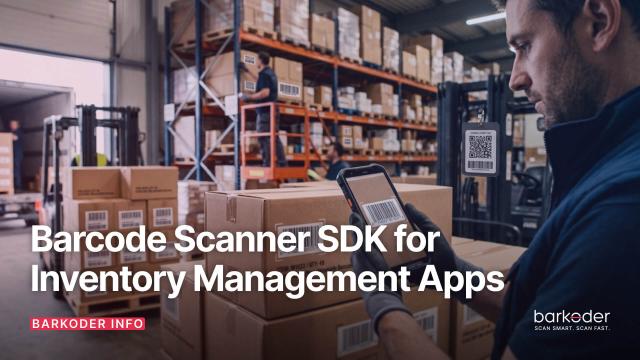
In logistics and warehousing, speed is the only metric that matters. Using features like Batch MultiScan, a warehouse worker can scan dozens of boxes in a single camera view. This drastically reduces the time required for inventory audits and shipment verification.
Healthcare and Life Sciences
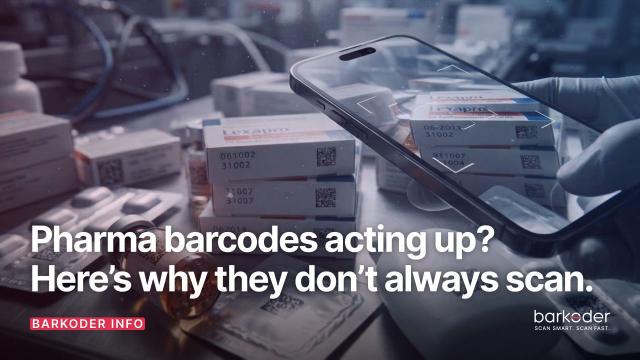
Precision is paramount in healthcare. From tracking patient wristbands to identifying tiny 2D Data Matrix codes on surgical instruments, the API must be 100% accurate. The ability to scan under-sized or etched codes via DPM (Direct Part Marking) is a game-changer for hospital supply chain management.
Education and Public Sector
Even sectors like education are being transformed. From managing library assets to verifying student IDs during exams, barcode technology simplifies administration. Check out our complete guide to barcode scanning in schools and universities to see how these institutions are digitizing their workflows.
Agriculture and Traceability
Modern farming relies on data to ensure food safety. By scanning barcodes at every stage—from the seed package to the final shipping crate—producers can ensure full "farm-to-fork" traceability. You can explore this further in our post on barcode scanning in agriculture.
The Future of the Barcode API: Beyond Simple Data Capture
We are moving into an era where the barcode api is no longer a standalone tool but a part of a larger AR and AI ecosystem.
Augmented Reality (AR) Overlays
Imagine a retail employee scanning a shelf. Instead of just seeing a list of numbers, the barKoder API utilizes Augmented Reality (AR) to project "Out of Stock" or "Discounted" labels directly onto the phone screen over the physical items. This interactive layer makes data actionable and reduces the cognitive load on the user.
Machine Readable Zone (MRZ) Scanning
The same API technology that reads a UPC code can now be trained to read the Machine Readable Zone (MRZ) on passports, visas, and ID cards. This converges identity verification and asset tracking into a single, unified mobile application, streamlining workflows for travel, hospitality, and security sectors.
Choosing Your Partner in Data Capture
When you choose a barcode api, you aren't just buying software; you are choosing a partner. You need a team that stays ahead of mobile OS updates (like iOS and Android's latest privacy changes) and constantly optimizes their algorithms for new camera hardware.
At barKoder, we pride ourselves on providing not just the fastest scanning engine, but the most developer-centric experience. Our API is designed to be "plug-and-play" while offering "pro-mode" customizations for those who need to squeeze every millisecond of performance out of their app.
If you are still wondering about the tangible ROI of this technology, read our exploration of the benefits of integrating the barKoder SDK to see how businesses are saving thousands of hours in manual data entry.