Short Introduction
From the moment students walk through the school gates until the final bell rings, barcode technology is working behind the scenes to make the school day smoother, faster, and smarter.
Barcode scanning has become an essential digital tool in modern education. Schools and universities are increasingly adopting barcode and QR code scanning systems to manage students, resources, and administrative processes more efficiently. What was once a manual, paper-based environment is now evolving into a faster, more accurate, and more secure digital ecosystem. Barcode scanning plays a major role in this transformation by simplifying everyday tasks and improving data reliability across educational institutions.
This blog explores how barcode scanning works in educational institutions, where it is used, its benefits, challenges, and why it is becoming essential for modern schools and universities.
Barcode Scanning in Schools and Universities
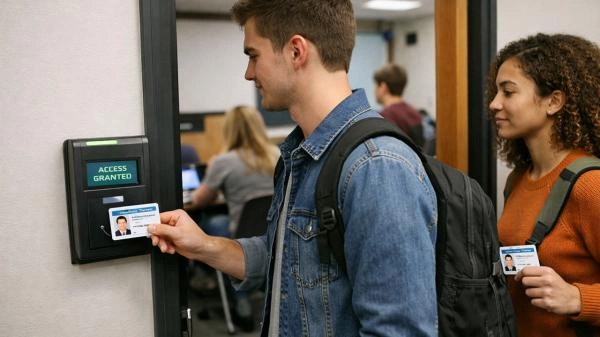
The school day often begins with attendance, and barcode scanning has changed this routine completely. Students scan their ID cards or mobile codes as they enter classrooms, instantly recording their presence without disrupting lessons. This same scanning system extends naturally into hallway access and building entry, where barcodes help control who enters specific areas, improving safety without creating a restrictive environment.
Barcode scanning in education refers to the use of printed barcodes or QR codes that represent students, books, equipment, documents, or access permissions. These codes are scanned using mobile phones, tablets, or dedicated scanning devices and instantly connect physical objects or people with digital records. This simple action replaces time-consuming manual data entry and significantly reduces human error. In schools and universities, barcode scanning becomes a bridge between physical classrooms and digital management systems.
One of the most common applications of barcode scanning in schools is student attendance tracking. Instead of calling names or signing paper sheets, students simply scan their ID cards when entering a classroom. The attendance record is instantly saved in the system, allowing teachers and administrators to view real-time data, generate reports, and identify attendance patterns. This method not only saves time but also prevents attendance manipulation and ensures more accurate records.
As students move between classes, barcode scanning supports timetable management and classroom allocation. Teachers can quickly confirm class groups, while administrators gain accurate data about room usage and overcrowding. In parallel, substitute teachers benefit from instant access to class information simply by scanning lesson materials or classroom codes.
Libraries in schools and universities benefit enormously from barcode scanning. Each book is assigned a unique barcode, and each student is linked to a personal ID code. When books are borrowed or returned, scanning automatically updates the library system. This approach eliminates lost records, speeds up service at the library desk, and allows staff to track overdue books and inventory levels with minimal effort. Large university libraries, in particular, rely on barcode scanning to manage thousands of titles efficiently.
Beyond daily lending, barcode scanning also simplifies long-term library planning and organization. Librarians can perform full inventory checks by scanning shelves instead of manually counting books, saving days of work and reducing mistakes. Damaged or missing items are identified quickly, and replacement decisions become data-driven rather than based on estimates. Barcode systems also support reservation workflows, enabling students to scan a book and instantly see availability or place a hold through a connected digital platform.
For students, barcode-enabled libraries create a smoother and more modern experience. Self-service kiosks allow quick borrowing without waiting in line, while automated reminders help students return books on time. Academic staff benefit as well, since textbooks and reference materials can be tracked across departments, ensuring fair access and better distribution. As libraries continue to evolve into hybrid physical and digital learning spaces, barcode scanning remains a core technology that keeps resources accessible, organized, and easy to manage for everyone involved.
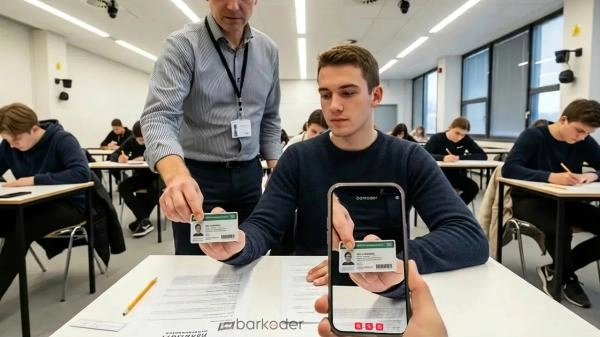
Barcode scanning is also widely used during exams and assessments. By placing barcodes on exam papers and student identification cards, institutions can verify student identity, track exam materials, and reduce administrative errors. This system helps prevent exam fraud, ensures that papers are correctly assigned, and simplifies grading workflows, especially in universities where exams involve large numbers of students.
In addition to security and accuracy, barcode scanning significantly improves the overall efficiency of exam administration. Exam papers can be distributed, collected, and logged within minutes, reducing stress for both staff and students. Scanning creates a clear audit trail that shows when papers were issued, submitted, and processed, making it easier to resolve disputes or missing-paper concerns. This level of traceability is particularly valuable during high-stakes exams where precision and accountability are critical.
Barcode-based exam systems also support faster and more reliable grading processes. Answer sheets linked to unique barcodes can be scanned and matched automatically with student records, minimizing the risk of mismatched results. For institutions using digital or hybrid assessments, barcodes act as a bridge between physical exams and online grading platforms. As class sizes grow and assessment methods evolve, barcode scanning continues to provide a scalable, secure, and dependable solution for managing exams in modern schools and universities.
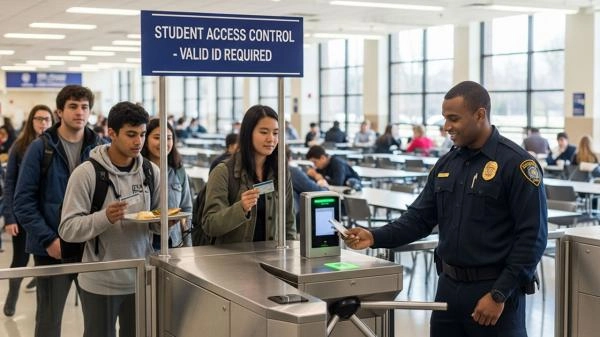
Barcode scanning in university cafeterias helps streamline daily food service operations while improving the overall student experience. By using barcode or QR codes on student ID cards or mobile apps, cafeterias can quickly process payments, verify meal plans, and reduce waiting times during busy hours. This system minimizes cash handling, lowers the risk of errors, and provides accurate transaction records. Universities also gain valuable insights into food consumption patterns, helping them manage inventory, reduce waste, and plan menus more effectively. As campuses move toward fully digital environments, barcode scanning in cafeterias becomes an essential tool for faster service, better control, and improved satisfaction for students and staff alike.
Another important use of barcode scanning in education is asset and equipment management. Schools and universities own valuable resources such as laptops, tablets, laboratory equipment, projectors, and sports gear. By labeling each item with a barcode, institutions can track who is using the equipment, when it was borrowed, and when it should be returned. This improves accountability, reduces losses, and simplifies audits, making resource management far more transparent and organized.
Barcode scanning also helps institutions plan equipment usage more effectively over time. Usage data collected through scans reveals which resources are in high demand and which are underutilized, allowing administrators to make informed purchasing and maintenance decisions. Equipment servicing and calibration schedules can be linked to barcode records, ensuring that laboratory and technical tools remain safe and functional. This proactive approach reduces downtime and extends the lifespan of expensive assets.
For students and staff, barcode-based equipment management creates a smoother borrowing experience. Checkouts and returns happen quickly without paperwork, while clear digital records protect both users and institutions from disputes or misunderstandings. In large campuses with multiple departments, barcode scanning ensures that shared resources are available when needed and returned responsibly. As educational environments continue to integrate technology into everyday learning, barcode-based asset management becomes a key foundation for efficiency, trust, and sustainability.
Student ID Cards and Campus Access
Student identification and campus access are also increasingly connected to barcode scanning systems. Barcode or QR-based student IDs can be used to enter buildings, access classrooms, borrow equipment, or attend events. This creates a more secure campus environment while reducing the need for multiple cards or manual verification. For universities, barcode-based access systems are especially useful in managing large campuses with multiple facilities.
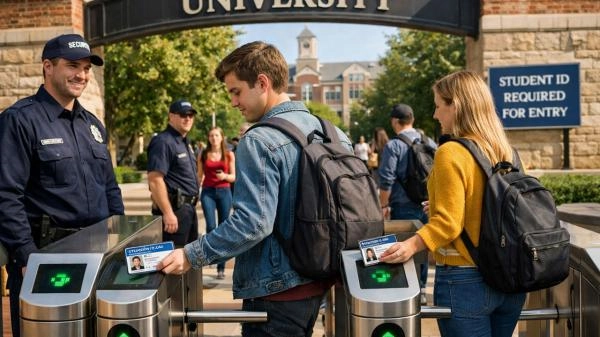
Barcode or QR-based student IDs can be used for:
- Campus entry
- Classroom access
- Cafeterias
- Dormitories
- Events
This increases security and access control while reducing the need for multiple cards.
Barcode vs QR Code in Education
Both are used, but QR codes are growing faster.
Feature | Barcode | QR Code |
|---|---|---|
Data capacity | Low | High |
Scan speed | Fast | Very fast |
Error correction | Low | High |
Smartphone friendly | Medium | Excellent |
Many institutions now prefer QR codes for flexibility and mobile scanning.
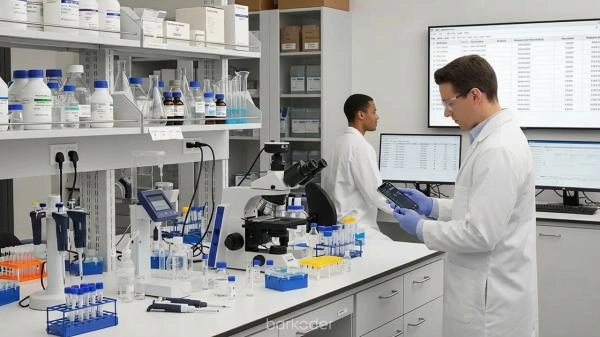
In addition, barcode scanning helps universities streamline data management and reduce human error across complex academic processes. By digitizing records related to research assets and laboratory inventory, institutions can quickly locate samples, monitor usage history, and prevent duplication or loss of critical materials. This level of traceability is especially important in multidisciplinary research projects where multiple teams share resources.
Barcode technology also enhances safety and compliance in laboratory settings. By scanning barcodes on chemicals and biological samples, researchers can verify handling procedures, track expiration dates, and ensure that materials are stored and disposed of according to regulations. This not only protects researchers but also strengthens institutional accountability and audit readiness.
Beyond laboratories, barcode scanning supports efficient coordination of academic events and collaborations. From issuing digital badges and access passes to managing session attendance and certification, barcodes simplify logistics and improve the overall experience for students, researchers, and visiting scholars. As higher education continues to adopt digital transformation strategies, barcode scanning remains a reliable and scalable solution that supports accuracy, efficiency, and innovation across teaching, research, and academic administration.
The benefits of barcode scanning in schools and universities are both practical and long-term. It increases operational efficiency by automating repetitive tasks, improves data accuracy by minimizing human error, and reduces administrative costs by limiting paper use and manual labor. Students benefit from faster services and a more modern learning environment, while educators gain access to reliable data that supports better decision-making.
Despite its advantages, implementing barcode scanning in education requires careful planning. Institutions must invest in initial setup, train staff and teachers, and ensure that student data is protected according to privacy regulations. However, once these systems are in place, the return on investment becomes clear through improved workflows and better resource management.
Looking ahead, barcode scanning will continue to evolve alongside digital education platforms. Integration with learning management systems, mobile-first applications, and data analytics will make barcode scanning even more powerful. As schools and universities move toward smart campuses and digital transformation, barcode scanning will remain a foundational technology that supports efficiency, security, and innovation in education.