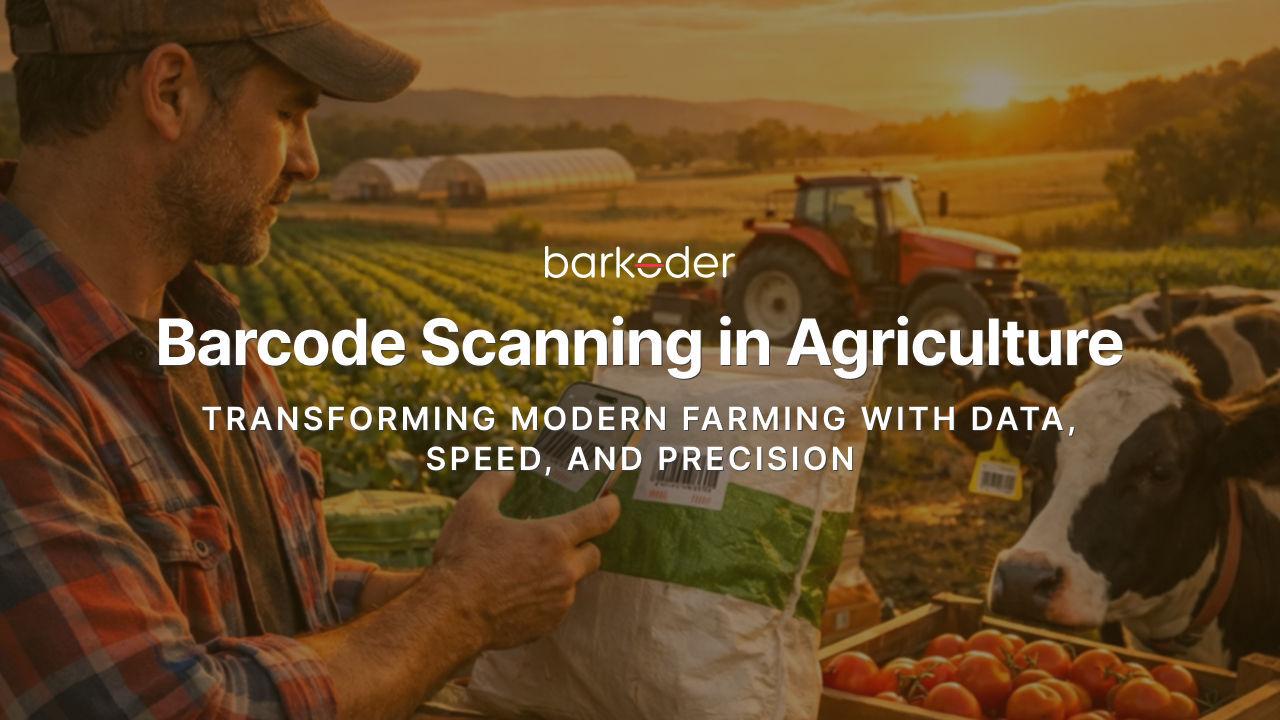
Agriculture has always been a sector that relies heavily on diligence, timing, and accuracy. However, farming in the twenty-first century now involves data rather than just soil, seeds, and weather patterns. Agricultural operations are increasingly using barcode scanning technology to increase traceability, efficiency, and profitability as the world's population is expected to reach 10 billion by 2050 and supply chains become more complex due to trade disruptions, climate variability, and stricter regulations.
Barcode systems are changing how farms run, how food is tracked, and how safety is guarantyd from seed to shelf. What started out as a straightforward retail labeling system has developed into a vital digital infrastructure tool for contemporary agriculture. In order to ensure the best variety selection and genetic tracking for increased yields, farmers now use barcodes on seed packets to track planting batches. Scannable tags on pesticides, fertilizers, and equipment in the field aid in real-time inventory management, cutting down on waste and avoiding overuse that could compromise soil health.
Barcodes allow for accurate lot tracking during harvest and processing, connecting each batch of produce to its origin, harvest date, and handling circumstances. This is essential for adhering to regulations such as the EU's farm-to-fork strategy or the FDA's Food Safety Modernization Act, where instant scans can confirm pesticide residues or recall contaminated products in a matter of hours rather than days. According to industry reports from groups like GS1, barcodes integrate with warehouse systems and GPS-enabled scanners in logistics to expedite shipping, minimizing errors in the transportation of perishable goods and reducing costs by up to 30%.
As IoT sensors and AI combine with barcodes to produce "smart labels," agriculture is on the verge of completely digitizing its operations. These developments promise predictive insights, such as predicting spoilage or optimizing routes based on real-time data, in addition to reactive fixes. Barcode scanning is essentially the foundation of a robust, data-driven food system that feeds the world more consistently than ever before, not just a tool.
The Growing Need for Traceability in Agriculture
The global population is projected to reach nearly 10 billion by 2050. To meet this demand, food production must increase by approximately 60–70 percent. At the same time, food safety regulations are becoming stricter, and consumers are demanding transparency about where their food comes from.
According to the Food and Agriculture Organization (FAO), roughly one-third of all food produced globally is lost or wasted each year. Much of this loss is due to poor inventory tracking, inefficient supply chains, and a lack of real-time data visibility. Barcode scanning directly addresses these challenges by enabling precise tracking of agricultural products at every stage.
Food recalls have also increased in frequency and cost. For large producers, the average cost of a food recall can surpass $10 million. It may take days or weeks to determine the source of contamination in the absence of traceability systems. Affected batches can frequently be located in a matter of minutes using barcode-based systems.
How Barcode Scanning Is Used on Modern Farms
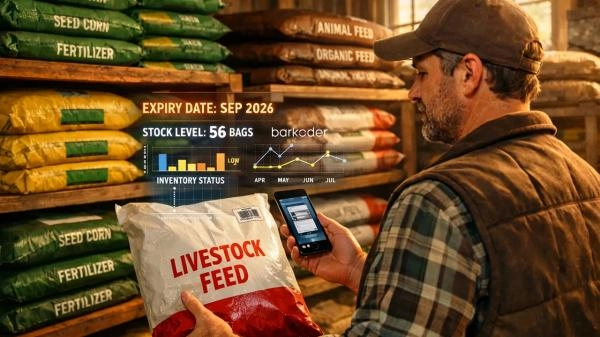
Contrary to popular belief, barcode scanning in agriculture actually begins much earlier in the supply chain. Important inputs like seeds, fertilizers, pesticides, and livestock feed already have distinct barcode labels long before crops are planted or animals are raised. These barcodes function as digital fingerprints for every product, enabling farmers to precisely manage inventory levels, track usage rates, and keep an eye on expiration dates to prevent spoiling or safety hazards. When these inputs are delivered to the farm, each item is scanned both at the point of application in fields or animal pens. Farmers can create thorough digital records that specify exactly what was used, where it was fed or applied, and when.
Another industry where barcode technology has brought about revolutionary changes is livestock management. A herd's animals may have physical barcode labels affixed to collars or ear tags, or their records may be connected by scannable identifiers kept on portable devices. With just a scan, this system gives farm workers fast access to vital information about individual animals, such as health histories, immunization schedules, breeding data, and movement logs. This automation reduces the likelihood of expensive human error that can happen when tracking details by hand and eliminates mountains of manual paperwork for large-scale operations that manage thousands of animals across vast properties. Harvest season is perhaps one of the most important times to use barcode systems because accuracy and traceability are paramount.
Each batch of crops is given a unique barcode that encodes specific information, including field location coordinates (sometimes down to specific rows), harvest date and time stamps, crop variety details, and quality grading results from inspectors, as they leave the field during harvests, which can take weeks or months, depending on scale and crop type. After that, these barcoded batches pass through each of the following stages: storage bins or silos; processing facilities where they are cleaned or sorted; packaging lines; and distribution channels that eventually reach retailers or wholesalers. The same code guaranties complete traceability back to the source at every stage of this journey, from farm to market shelf or even directly to consumers.
The impact of these technological advancements has been demonstrated by recent studies on agricultural logistics: farms using barcode-based inventory systems report reductions in stock discrepancies of up to 30%, which is a significant improvement over traditional paper-based methods, and administrative workloads associated with record-keeping tasks can drop by nearly 40%. These figures present a strong argument for the ongoing use of barcoding technology at every stage of agricultural production in a sector where profit margins can be extremely narrow and food safety is constantly in question.
Improving Inventory and Warehouse Efficiency
In the agricultural supply chain, post-harvest handling is a crucial phase where barcode scanning technology truly shines. Agricultural warehouses are complicated spaces that frequently house a wide variety of crop varieties arranged not only by type but also by different quality grades and particular storage needs like humidity or temperature. Without the accuracy of automated scanning systems, managing these inventories by hand can quickly become cumbersome; mistakes, misplaced items, inaccurate counts, and general confusion about what stock is where are all more likely.
Barcode scanning has a revolutionary effect on warehouse management, according to recent research on supply chain digitization. Warehouses can increase inventory accuracy to levels above 99 percent by incorporating this technology, which is a significant improvement over conventional manual methods. This increased level of accuracy has real advantages in agriculture, where fresh produce is perishable and margins are narrow: it significantly lowers spoilage brought on by misplaced or neglected stock sitting in forgotten corners.
Additionally, barcode scanners enable the automatic enforcement of first-in-first-out (FIFO) inventory practices, which minimize waste from expiration or quality degradation by ensuring that older goods consistently move out before newer arrivals. A mid-sized produce distributor that handles about 50,000 tons of fruits and vegetables annually can serve as a concrete example to demonstrate the practical impact. They can cut product shrinkage by an astounding 5-8 percent per year by integrating barcode tracking into every aspect of their business, from receiving shipments to planning storage and dispatch.
These percentages quickly add up in terms of dollars and cents; for many distributors in this category, these improvements could result in the annual recovery of hundreds of thousands of dollars that would otherwise be lost due to spoilage or poor management.
Food Safety and Regulatory Compliance
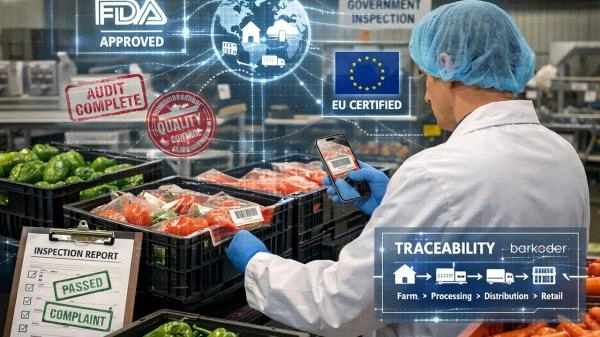
Governments around the globe are ramping up efforts to enforce stricter traceability regulations in the food industry. These measures are designed to protect public health by ensuring that contaminated products can be quickly identified and removed from circulation.
For example, in the United States, the Food Safety Modernization Act (FSMA) mandates more rigorous record-keeping practices alongside faster and more coordinated response mechanisms in the event of a contamination incident. This means food producers must be able to provide detailed information about product origins, movement, and handling at a moment’s notice. Similarly, the European Union has implemented comparable traceability requirements across all member states, holding businesses accountable for maintaining transparent supply chains.
Many agricultural businesses are using barcode scanning systems and other digital tracking technologies to effectively comply with these legal requirements. With a fast scan or database search, these tools allow producers to replace laborious paper logs with instant access to batch records. In addition to streamlining day-to-day operations, this is extremely helpful in times of emergency, as it allows businesses to quickly identify which lots are impacted by contamination. Instead of needlessly removing entire shipments from the shelves, they are able to recall only those particular batches. Both monetary losses and possible harm to a brand's reputation are significantly decreased by such focused action.
Leading food safety analysts' study further highlighted these advantages by showing that businesses using digital traceability systems saw a 70% decrease in recall response times when compared to their manual counterparts. This significant improvement demonstrates how adopting technology is not only about adhering to regulations but also about preserving customer confidence and operational resilience in a market that is becoming more and more demanding.
Enhancing Supply Chain Transparency
Consumers today are becoming more interested in the origins of their food. According to surveys, more than 70% of consumers are more inclined to trust companies that offer clear sourcing information. This transparency is made possible by barcode systems.
The original barcode data is still stored in the system when produce is delivered to store shelves. Transportation routes, harvest dates, and origin farms can all be tracked by retailers. In certain systems, customers can even view farm-to-table data directly by scanning QR-based barcodes.
In recent years, agricultural exports from around the world have surpassed $1.7 trillion. Accurate tracking and documentation are necessary for managing international shipments. Barcode scanning guaranties accurate shipment verification, seamless customs processing, and fewer delays in international trade.
Reducing Labor Costs and Human Error
In agriculture, labor shortages are becoming a bigger problem. Farmers in many areas find it difficult to hire enough workers for both administrative and fieldwork duties. By eliminating the need for manual data entry and paperwork, barcode scanning enables fewer employees to oversee larger operations.
Depending on workload and circumstances, manual data entry error rates can vary from 1% to 5%. Even a 1% error rate can cause large losses in high-volume agricultural operations. When systems are set up correctly, automated barcode scanning lowers this error rate to almost zero.
Time savings are just as significant. While manually entering data can take 20 to 30 seconds per entry, scanning a barcode takes less than a second. The efficiency gains are significant across thousands of daily transactions.
Supporting Precision Agriculture and Data Analytics
Making decisions based on data is essential to precision agriculture. Real-time analytics on crop yields, fertilizer usage, equipment maintenance, and distribution patterns are made possible by the seamless integration of barcode systems with farm management software.
Barcode scanning joins a larger digital ecosystem when paired with other technologies like GPS mapping and Internet of Things sensors. Farmers can compare seasonal outputs, evaluate performance by field section, and allocate resources as efficiently as possible.
Trends like which crop varieties thrive in particular environments or which storage techniques minimize spoiling can be found in data gathered by barcode systems. Increased sustainability and productivity are directly related to these insights.
Sustainability and Waste Reduction
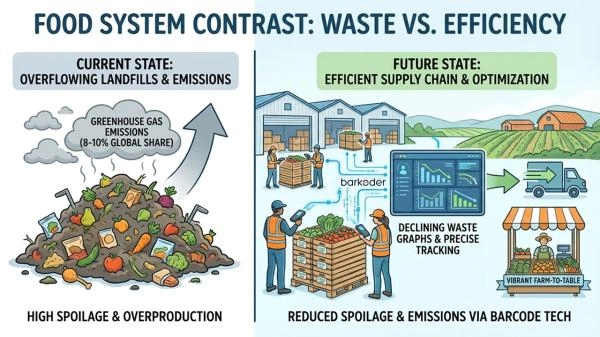
Reducing food waste is not only an economic but also an environmental priority. Globally, food waste is responsible for 8-10% of greenhouse gas emissions. Barcode systems are thought to lower spoilage and overproduction by increasing tracking accuracy and guaranteeing effective product distribution.
Farmers and distributors must be able to monitor inventory levels in real time in order to modify harvesting schedules and shipping quantities in accordance with the actual inventory level. This will prevent excess inventory from being thrown out because it won't sit around and eventually waste away.
The Future of Barcode Scanning in Agriculture
As farms digitize their operations, the market for agricultural barcodes keeps expanding. Within the next ten years, the global barcode scanner market is expected to grow to tens of billions of dollars, partly due to increased use in the food production and agriculture industries.
Even small and medium-sized farms can now implement mobile devices and rugged handheld scanners due to their increasing affordability and power. Real-time synchronization between fields, warehouses, distributors, and retailers is made possible by cloud-based systems.
Barcode scanning will continue to be a fundamental technology as global food systems become increasingly interconnected. Even though new technologies like blockchain and RFID are becoming more popular, barcodes are still affordable, scalable, and simple to use.
Barcode scanning is no longer just a retail tool. In agriculture, it has become a critical driver of traceability, efficiency, compliance, and sustainability. From seed tracking and livestock management to harvest logistics and international export documentation, barcode systems bring structure and intelligence to an industry that feeds the world.
Agriculture is embracing digital transformation due to the need for operational efficiency, growing regulatory pressure, and rising global demand. At the heart of this revolution is barcode scanning, which helps farms run more efficiently, cut waste, safeguard consumers, and create a more robust food supply chain going forward.