In modern industrial supply chains, traditional paper labels simply don't cut it. Heavy machinery, intense chemical exposure, extreme thermal cycles, and decades of operational wear routinely shred, peel, or bleach standard adhesive stickers. A label that falls off part way through a component's life doesn't just look bad - it breaks the chain of custody that lets a manufacturer prove where a part came from, what it went through, and whether it's safe to keep using. To maintain component-level traceability across complex life cycles, industries like manufacturing, automotive, aerospace, electronics, and medical devices rely on Direct Part Marking (DPM).
By permanently inscribing data directly onto an item's physical surface, DPM creates an indestructible link between a physical asset and its digital history. That link has to survive everything the part survives: machining fluid, welding heat, years in a warehouse, a second life as a remanufactured component. It's a fundamentally different proposition than printing on paper, and it comes with its own set of engineering trade-offs. In this guide, we break down what direct part marking is, how it's applied, why the resulting DPM Data Matrix codes are so hard for ordinary scanners to decode, where the practice is used across industry, and how modern barcode SDKs solve the problem in software rather than expensive dedicated hardware.
Whether etched into a steel engine block, laser-engraved onto a titanium surgical instrument, or dot-peened onto an aluminum chassis, a DPM code remains legible throughout the item's entire lifecycle... For a deeper dive into how these codes are structured and decoded, check out our essential guide to DPM Data Matrix codes.
What Is Direct Part Marking?
Direct Part Marking (DPM) is a process that applies a DPM barcode or alphanumeric code directly onto the surface of an item rather than printing it onto an intermediate medium like a paper or synthetic label. Instead of an adhesive layer sitting on top of the part, the mark becomes part of the part itself, physically altering the surface through removal, deformation, or discoloration of the material.
Whether etched into a steel engine block, laser-engraved onto a titanium surgical instrument, or dot-peened onto an aluminum chassis, a DPM code remains legible throughout the item's entire lifecycle, from the moment it leaves the production line to the day it's disassembled for recycling or remanufacturing. That durability is exactly why regulated, safety-critical industries have standardized around it instead of relying on labels that can be removed, swapped, or simply worn away.
Guidelines established by major industrial bodies ensure complete end-to-end component traceability from raw material assembly to aftermarket maintenance and recycling. Two of the most widely referenced are the AIAG B-17 2D Direct Parts Marking Guideline, which governs how automotive parts should be marked and read, and the AIAG CQI-28 Traceability Guideline, which sets expectations for how that marking data flows through the supply chain. Because these frameworks were built for regulated industries, they don't just define the code format - they also define acceptable marking depth, contrast, placement, and print-quality grading, which is part of why DPM implementation projects tend to involve quality engineers as much as software teams.
Common DPM Marking Methods
Depending on the material composition, production speed, and environmental conditions, manufacturers utilize several primary methods to generate a DPM barcode. The choice of method has a direct effect on how easy the resulting code is to scan later, since each technique produces a distinct visual signature:
- Laser Marking: Uses high-intensity laser beams to melt, ablate, or discolor the material surface. It offers exceptionally high precision, rapid execution speeds, and works well on metals, plastics, and ceramics. Laser marks are usually the easiest DPM codes to scan because the contrast between marked and unmarked surfaces can be tightly controlled, but glossy or highly reflective finishes can still cause glare.
- Dot Peen: A mechanical stylus repeatedly strikes the material surface, forming small indented pits that make up the barcode pattern. It is widely used for heavy industrial metal parts that undergo harsh treatment, such as cast engine components, because the marking head can be mounted directly on a production line and doesn't require a clean-room environment. The trade-off is that individual dots are physically disconnected from one another, which is one of the harder problems a decoder has to solve.
- Chemical Etching: Employs chemical solutions to remove surface material through a specialized mask. This process is ideal for thin metals or delicate components where mechanical stress or heat must be minimized, such as thin-walled aerospace brackets or surgical instruments that can't tolerate the micro-fractures a stylus or laser might introduce.
- Engraving: Mechanically cuts grooves into the surface using a rotating bit or carbide tool, producing durable marks suited for structural components that will see heavy handling, repeated cleaning, or outdoor exposure.
- Inkjet: Direct solvent or UV-curable industrial inkjet application onto the part. While fast and versatile, and well suited to high-throughput lines, it offers lower physical durability than surface-altering methods like laser or peening, since the mark sits on top of the surface rather than becoming part of it.
- Molding / Casting: The barcode design is machined directly into the production mold or die. As the plastic or molten metal sets, the DPM code forms as a raised or recessed feature on the final product. This is common for high-volume plastic and die-cast metal parts where adding a separate marking step to the production line isn't practical.
Whichever method is used, the resulting mark still has to be decoded by whatever scanning hardware sits downstream, which is why it's worth looking at the full range of barcode types an SDK supports rather than assuming DPM Data Matrix support alone covers every code you'll encounter on a mixed production line.
Why Data Matrix Is Common for DPM
While several symbologies can technically be marked directly onto parts, the DPM Data Matrix is the undisputed global standard for direct part marking. Recommended across universal frameworks - including the global GS1 DataMatrix Guideline and the ISO/IEC 16022 Data Matrix bar code symbology specification - the format excels at high-durability tracking in a way that older 1D barcodes simply can't match once you're marking directly onto metal or plastic.
The Data Matrix 2D format offers several crucial advantages for DPM applications:
- High Information Density in Minimal Footprint: Data Matrix can encode dozens of characters into a tiny fraction of a square inch, making it feasible to mark tiny items like microchips or surgical tools where there's no room for a larger 1D barcode.
- Built-in Error Correction (ECC 200): Reed-Solomon error correction enables a DPM Data Matrix to remain fully readable even if a significant portion of the code is damaged, scratched, or obscured by oil, grease, or corrosion - exactly the kind of contamination a part accumulates over years of service.
- Flexible Geometry: It supports square and rectangular grid configurations, fitting clean layouts onto narrow cylindrical or structural part surfaces, such as the outside of a pipe or the shaft of a tool, where a square code wouldn't fit the available marking area.
- Omnidirectional Readability: Because the finder pattern is built into the symbol itself, a Data Matrix code can be read regardless of the orientation the scanner approaches it from, which matters a great deal on a shop floor where operators are scanning components by hand at inconsistent angles.
Beyond Data Matrix: DPM QR Code Support
While Data Matrix remains the traditional standard, modern industrial logistics increasingly demand flexibility across alternative 2D symbologies. Working closely with industry leaders like Inexto, barKoder has pioneered direct part marking support for DPM QR Codes - a rare capability in the barcode scanning market. This allows high-speed track-and-trace systems in complex factory environments to reliably scan direct-marked QR Codes alongside standard DPM Data Matrix and DotCode symbols.
Where DPM Codes Are Used
Direct part marking powers operations across high-stakes industrial ecosystems, and the specific standard that applies usually depends on the regulatory body overseeing that industry:
Industry | Primary Use Case | Governed Standard
|
|---|---|---|
Automotive | Engine block traceability, transmission casting tracking, and safety component lifecycle verification. | |
Aerospace & Defense | Critical turbine component logging, structural airframe assembly tracking, IUID compliance, and maintenance auditing. | SAE AS9132 / MIL-STD-130 |
Electronics | Printed Circuit Board (PCB) tracking, silicon wafer micro-marking, and small component trace-back. | |
Medical Devices | Unique Device Identification (UDI) compliance for surgical instruments, implants, and diagnostic tools. | |
Manufacturing | Work-in-progress (WIP) tracking, automated assembly routing, and quality assurance logging across production runs. |
A closer look at why each of these industries leans on DPM specifically:
Automotive: Engine blocks, transmission housings, and safety-critical components like airbags and brake assemblies are marked at the casting or machining stage so that a single component can be traced from the foundry through final assembly and, if a recall ever happens, all the way back to the specific production batch. The AIAG B-17 guideline exists precisely because a mislabeled or unreadable part in a safety recall isn't just an inconvenience, it's a liability issue.
Aerospace & Defense: Turbine blades, structural airframe fasteners, and military equipment are marked and graded against SAE AS9132 and MIL-STD-130 (IUID). These standards define print-quality thresholds specifically for Data Matrix symbols marked using dot peening, laser, and electro-chemical etching on metal. Maintenance crews rely on these marks decades after a part is manufactured, so long-term legibility isn't optional.
Electronics: PCB assemblies and even individual silicon wafers are increasingly marked at the component level, in part to satisfy the traceability requirements laid out in IPC-1782, which was written to help manufacturers combat counterfeit components and trace a defective part back through a global, multi-tier supply chain.
Medical Devices: Surgical instruments, implants, and diagnostic equipment carry a Unique Device Identifier under FDA UDI regulations, and for reusable or reprocessed instruments, that identifier often has to be permanently marked directly on the device itself rather than only on its packaging, since the packaging won't survive sterilization cycles the way the instrument does.
Manufacturing: On the general production floor, DPM underpins work-in-progress tracking, automated routing between stations, and quality assurance logging, all governed by the base ISO/IEC 16022 Data Matrix specification even outside industries with their own additional regulatory layer. For a broader look at how this plays out in day-to-day operations, see our manufacturing industry page.
Why DPM Codes Are Difficult to Scan
Standard barcode scanners designed for black ink printed on flat white paper often fail entirely when presented with direct part marks. That's not a minor inconvenience on a production line - a scanner that fails intermittently is often worse than one that fails consistently, because it erodes operator trust and leads to manual workarounds that undermine the entire point of automated traceability. The underlying physical characteristics of DPM create distinct imaging hurdles:
1. Low and Variable Contrast
Instead of high-contrast black-and-white print, a DPM barcode depends on light reflections off small physical indents, cuts, or surface discoloration. The same code can look completely different depending on the angle and color temperature of the light hitting it.
2. Specular Glare and Reflections
Metallic, polished, or wet surfaces create extreme highlights (glare) that wash out image sensor pixels, effectively erasing part of the code from the camera's point of view even though the physical mark is perfectly intact.
3. Surface Textures and Background Noise
Rough, cast, or brushed metals introduce background noise that visually mimics dots or module edges, making it genuinely difficult - even for a trained human eye - to tell where the code ends and the surrounding surface texture begins.
4. Curved and Uneven Geometry
Marking onto pipes, tubes, or contoured parts warps the grid structure of the Data Matrix, so the modules that should form a perfect square grid instead appear stretched, skewed, or compressed depending on where they sit on the curve.
5. Small Module Sizes and Non-Contiguous Dots
High-density markings on PCB boards or micro-tools produce tiny individual dots or squares that require precise edge detection. Dot peen marks present isolated indents rather than connected shapes, making grid reconstruction difficult for traditional edge-detection software.
6. Wear and Environmental Contamination
Oil, grease, soot, corrosion, and operational mechanical wear erode or partially destroy the mark over time, which means a scanner has to work with an increasingly incomplete version of the original code as the part ages. Independent benchmarking backs this up: when several leading barcode SDKs were put head-to-head on a batch of real DPM Data Matrix samples, decode rates varied dramatically between vendors, underscoring just how much the underlying computer vision engine matters for DPM specifically. A generic decoder built for retail barcodes and a decoder purpose-built for DPM are not interchangeable, even though they're nominally reading the same symbology.
What to Look for in a DPM Barcode Scanner SDK
When building software solutions or mobile applications to scan DPM, off-the-shelf camera decoders fall short. Evaluating vendors on paper feature lists isn't enough either—the real test is running actual samples from your production line through the SDK before committing to it. Your direct part marking scanner framework or SDK should deliver:
- Advanced Image Pre-Processing: Algorithms capable of dynamic contrast enhancement, noise reduction, and illumination adjustment before decoding takes place, so the decoder is working with the cleanest possible representation of the mark rather than raw, unprocessed camera data.
- De-Glare and Reflection Handling: Software filters engineered to reconstruct lost modules caused by specular camera flash or overhead factory light bounce, rather than simply failing whenever a mark catches the light.
- De-Dotting Algorithms for Dot Peen: Specialist computer vision logic that bridges individual peened dots into contiguous Data Matrix grid modules, effectively reconstructing the intended symbol from a collection of disconnected marks.
- Deformity Reconstruction: High tolerance for perspective distortion and non-linear warping, along with resilience to damaged finder patterns, so a code marked on a curved surface or partially worn away can still be recovered.
- Cross-Platform Flexibility: Support across mobile, desktop, and web platforms - including iOS & Android native SDKs - as well as cross-platform framework integrations for Flutter, React Native, Capacitor, and Python—so the same scanning logic can be reused across a handheld scanner app, a shop-floor kiosk, and a browser-based dashboard without re-implementing the decoder three times.
- Configurable Scanning Templates: The ability to save DPM-specific decoding settings—resolution, decoding speed, region of interest—as a reusable template, since the ideal configuration for scanning a dot-peened engine block is very different from the one for a laser-etched PCB.
How barKoder Supports DPM Scanning
The barKoder Barcode Scanner SDK is engineered with custom computer vision routines specifically designed for harsh industrial DPM environments, and it's built to run on the actual devices already on your shop floor rather than requiring dedicated hardware scanners.
- Proprietary MatrixSight® Engine: Powered by MatrixSight®, our decoding engine dynamically recovers severely broken L-shaped finder patterns and reconstructs missing clocking tracks even when significant portions of the code are obscured, going well beyond what conventional decoders can tolerate.
- Specialized Dot Peen De-Dotting: Seamlessly connects non-contiguous dots caused by worn stylus tips, shallow impressions, or varying material hardness, turning a scattered field of pits into a readable grid.
- Smart Local Contrast Boost: Instantly resolves low-contrast marks on dark plastics, machined steel, or cast aluminum surfaces without requiring specialized external lighting rigs.
- Deformity Tolerance: Advanced computer vision algorithms handle perspective distortion and non-linear warping on curved or contoured parts, ensuring pipes, shafts, and other cylindrical components remain fully scannable.
- Commercial Field Proven: Real-world enterprise deployments rely on barKoder for complex tracking workflows. Inexto uses the SDK across factory and logistics track-and-trace projects running on industrial mobile computers, working with DPM Data Matrix, DotCode, and QR codes side by side. Omicron integrated it to scan the many different code types found across parts on a luxury automotive shop floor, with the added requirement of fully offline license activation for devices operating on segregated, internet-restricted networks. Tenaris deployed it inside its PipeTracer .NET MAUI app suite to reliably read small, low-quality, and partially damaged codes like VINs in real field conditions, replacing inconsistent native-camera scanning that had frustrated its drivers.
- Enterprise Manufacturing Readiness: Purpose-built for integration into shop floor workflows, inventory trackers, and industrial handheld devices, as detailed on our manufacturing industry page, and across the full range of sectors covered on our industries overview page.
- Developer Resources: Get up to speed quickly with step-by-step guides in the barKoder Documentation Hub, including a working DPM mode configuration example for Android, and test our capabilities directly via the barKoder Web Demo App before writing a single line of integration code.
- Proven Across Use Cases: Beyond DPM, barKoder's track record spans dozens of deployments detailed in our customer stories and testimonials, reflecting the same SDK core that powers the DPM decoding described here.
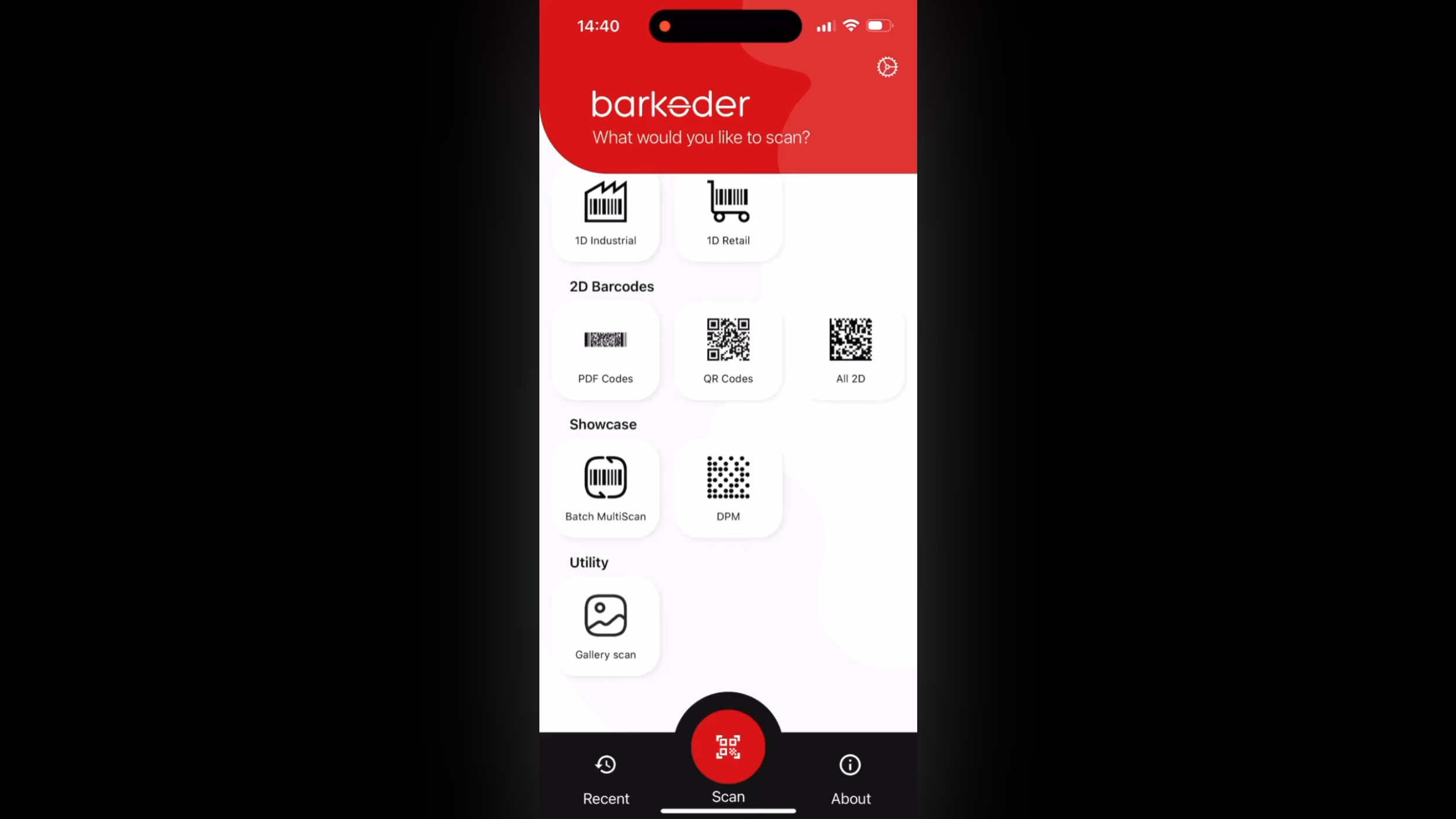
Try our platform firsthand: test barKoder online with real DPM Data Matrix samples, download the barKoder demo app on iOS App Store or Google Play Store, or request a quote to discuss a DPM-specific evaluation with our team.
Start Your Free 30-Day Trial