On this page
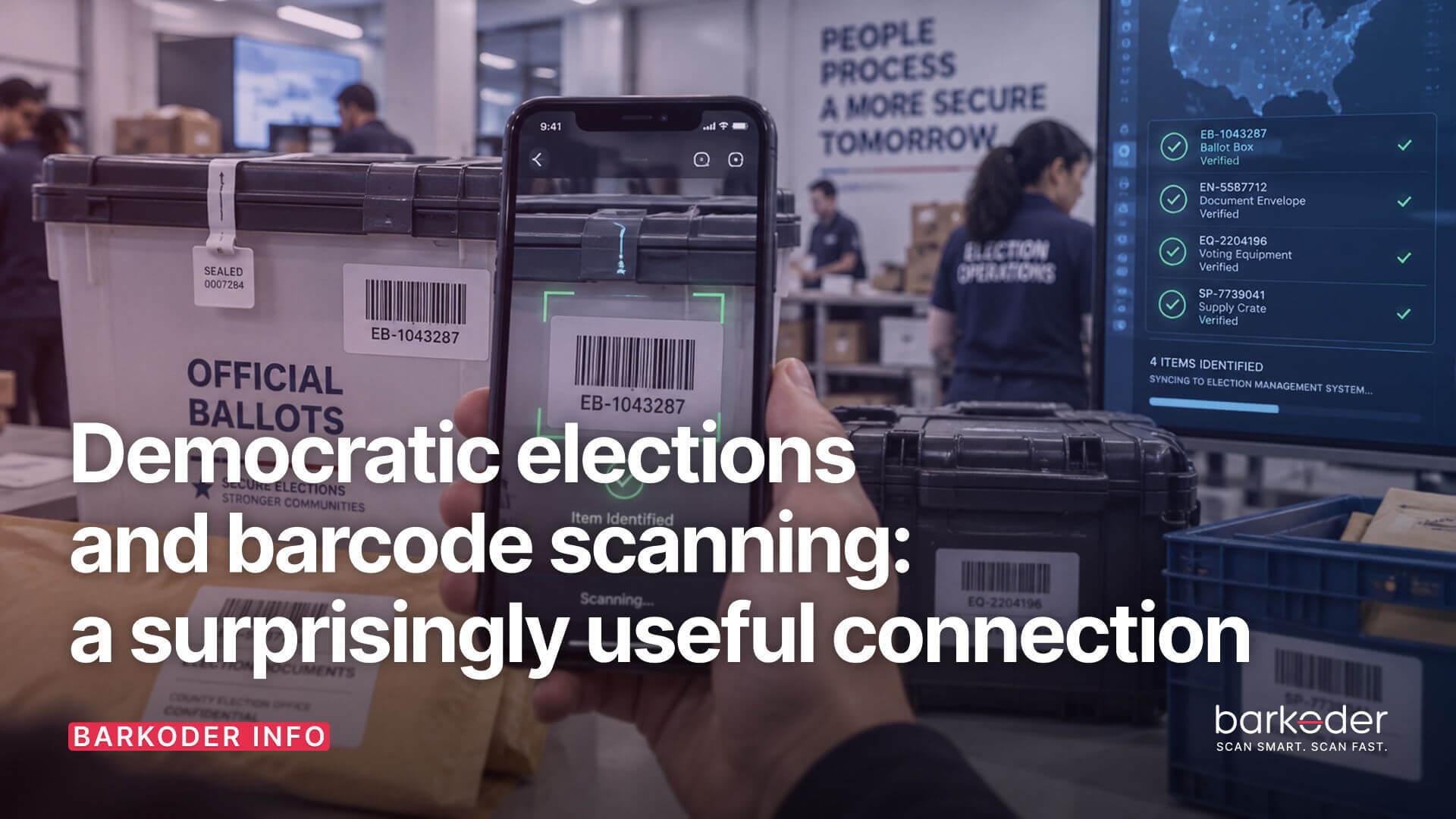
Elections and barcode scanning don't seem to have much in common, until you look at the logistics behind a vote. Thousands of documents, devices and deliveries have to be identified and tracked, and that is exactly where scanning helps.
Where Do Barcodes Come Into the Picture?
Imagine election day. Voters are arriving at polling stations while election workers verify documents, prepare materials, check equipment and account for deliveries.
Now imagine typing every document reference, equipment number and identification code into a computer by hand. One number at a time, then another, and another. Repeated hundreds or thousands of times, this becomes slow, and every manual entry is a chance for a typo.
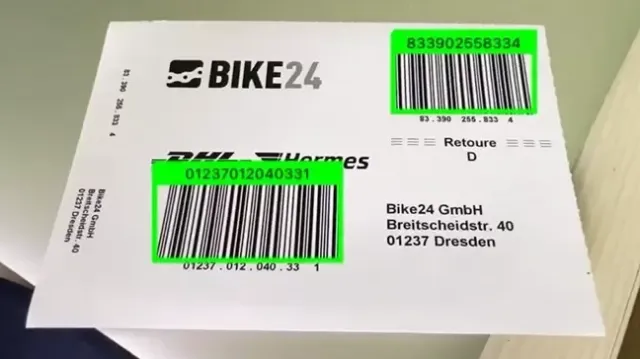
Barcode scanning removes most of that. Instead of typing long IDs, a worker scans a barcode or QR code, and the scanning software sends the encoded data straight to the connected application, ready to process.
Point the camera. Scan. Done.
It's a small improvement, but across thousands of items and records, small improvements add up fast.
One number, then another, then another. Slow when repeated, and one missed digit creates confusion.
The software captures the encoded data and sends it straight to the connected application, ready to process.
It's Not About Scanning the Vote
A crucial distinction first: barcodes in elections do not determine or record a voter's choice. That is not the idea.
Their value lies in identifying and organizing the materials and procedures around the vote: equipment, paperwork, containers, credentials and anything else that must be tracked. A barcode gives each item a distinct digital identity, and a scan lets the system pull up the relevant information without anyone typing it.
Logistics and warehouses have worked this way for years. The difference in an election is that accuracy and organization matter even more.
The Hidden Logistics Behind an Election
Voters see only the polling place: arrive, cast a ballot, leave. Behind that simple experience sits a much larger operation. Materials are prepared and distributed, equipment is delivered to the right polling locations, documents are organized, and after the vote everything is collected and returned. Every time something moves, someone needs to know what it is, where it came from, where it's going and whether it arrived safely. Multiply that by hundreds or thousands of packages, documents and devices, and tracking gets complicated. With barcodes, employees scan instead of writing things down or updating spreadsheets by hand:
- Arrival - A package arrives at a storage facility. Scan. The system records its arrival.
- Dispatch - Equipment is prepared for a polling station. Scan. A record shows where it is headed.
- Return - Equipment is collected and returned. Scan. The same record trail continues.
The approach is simple, but it makes it easier to follow materials, keep accurate records and see what's happening at every stage. Voters may never notice it, yet it's exactly the kind of technology that makes a complex operation easier to manage.
Why Speed Isn't Everything
When people talk about barcode scanning, speed usually comes first, and nobody wants to wait on a scanner. But in something as carefully coordinated as election logistics, accuracy and reliability matter just as much. A fast scan is useless if the system reads the wrong code, or misses one entirely.
Real working conditions make this harder than it sounds. Lighting may be poor in a storage room. A label may be damaged, printed at an angle or placed somewhere awkward. Employees may be scanning with a smartphone rather than a dedicated device.
A good scanning solution has to handle all of that: perform consistently under different conditions, recognize codes reliably, and keep the process straightforward for the people using it. The technology should make the job easier, not add a new problem to a complex operation.
Smartphones, and How a Few Seconds Become Hours
Barcode scanning no longer needs large, specialized hardware. Modern phone cameras are remarkably capable, and with the right scanning software the phone in a pocket becomes a powerful data-capture tool.
Picture an election worker moving between storage facilities, distribution centers and polling stations. Instead of carrying dedicated scanners everywhere, they can use a smartphone to record deliveries, scan documents, identify equipment or confirm the right materials reached the right place. We already know how convenient it is: see a QR code, point the camera, and the information appears.
Professional scanning involves more than opening a camera app. Organizations need reliable performance, support for many barcode types and software that integrates into their existing applications. But the principle holds: devices people already carry can become valuable operational tools.
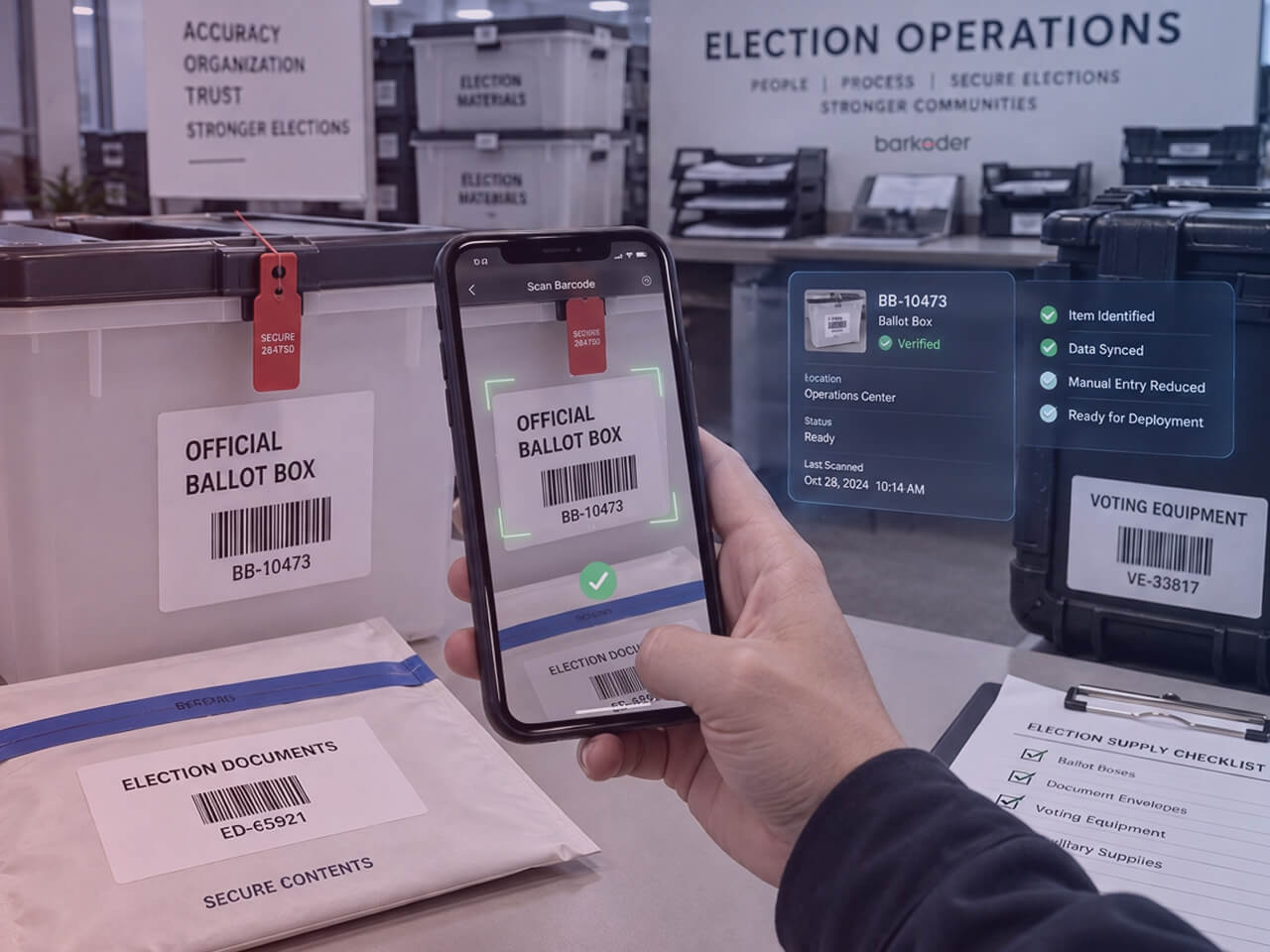
Automation also reduces human error. Every manual entry or copy between records risks a missed digit, a wrong ID or a forgotten update. Removing those small steps makes everyday work faster and more consistent.
Security Still Matters
Whenever technology enters an election-related process, security has to be taken seriously. Putting a barcode on a document or device doesn't make the information secure by itself. The bigger questions are what data is stored, how it is processed, who has access, how the system verifies that information is correct, and how the whole infrastructure is protected.
A barcode is only one small component of a much larger system. It should simplify everyday processes without introducing new risks or compromising the information being handled.
So, What Do Elections and Barcodes Really Have in Common?
More than you'd expect. Both rely on accurate information, both need careful planning and coordination, and both benefit from less manual work and more efficient ways to handle large amounts of data, documents and equipment.
The technology itself is tiny: a few lines, a simple pattern, a square QR code on a label. But behind that pattern can sit an equipment ID, a document reference, a database record or delivery details. The scanner doesn't need to understand the election process. It reads the code accurately and passes the data to the system that handles tracking, verification, inventory and reporting.
A barcode won't decide an election, replace election workers or replace the democratic process. Its role is practical: identifying equipment, tracking materials, organizing documents, verifying deliveries and making administrative tasks faster and more consistent. It's not the main attraction. It's one of those technologies working quietly in the background so everything runs a little more smoothly.
On election day, voters shouldn't have to think about any of it. They should walk into their polling place, cast their ballot and leave knowing the processes behind the scenes are organized, accurate and running as they should. Ultimately, democracy is about people and their votes, and technology is there to support the processes that make it work.

Frequently asked questions
What do elections have to do with barcode scanning?
Barcode scanning can help simplify election-related processes by making it easier to identify, track, and manage documents, equipment, and other materials used during elections.
Is barcode scanning used to count votes?
Not necessarily. Barcode scanning can support administrative tasks, document management, and equipment tracking, but its use does not automatically mean that it is involved in counting votes. The application depends on the election system and the procedures in place.
Why are accuracy and reliability important in election barcode scanning?
Election-related operations require accurate and dependable data. A good barcode-scanning solution should work reliably even in challenging conditions, such as poor lighting, damaged labels, or barcodes printed at an angle.