barKoder Web SDK Now Available on Microsoft Marketplace
In today's fast-paced enterprise landscape, the ability to seamlessly integrate high-performance data capture into business applications is critical. To make our professional barcode scanning capabilities more accessible to organizational software environments worldwide, we are pleased to announce that the barKoder Barcode Scanner SDK for Web is now officially listed on Microsoft Marketplace. This listing gives developers, independent software vendors (ISVs), and enterprise teams an efficient, trusted avenue to discover and assess barKoder’s advanced, browser-based scanning technology.
As modern organizations increasingly shift their infrastructure towards cloud-native, browser-accessible SaaS platforms, relying on legacy physical hardware or slow, unmaintained open-source utilities introduces significant friction. By utilizing the Microsoft Marketplace platform, modern procurement teams and engineering leads can confidently evaluate enterprise-grade components that complement their existing architecture. This listing serves as a structured digital storefront where organizations can easily explore the core functionalities of the barKoder Web SDK, inspect deployment requirements, and connect directly with our engineering team to map out custom implementations.
Next-Generation Performance with WebAssembly
The barKoder Web SDK represents a major technological leap forward for web-based data capture. Historically, running intense image processing algorithms within web browsers suffered from major latency and hardware compatibility issues. barKoder addresses this bottleneck by executing its core, proprietary scanning engine through WebAssembly (Wasm). This compilation technology allows the SDK to run directly in the browser close to native speeds, maximizing mobile and desktop hardware capabilities without requiring users to download or install external plugins.
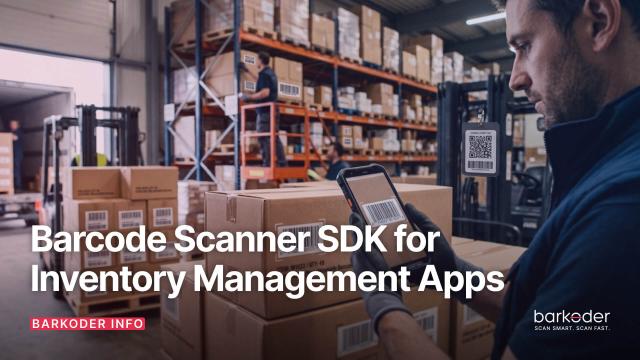
Whether your field technicians are utilizing standard smartphones, warehouse operators are using tablets, or retail workers are using desktop workstations, the barKoder engine transforms any device equipped with a standard modern web browser and a camera into a rapid, aggressive barcode capture tool. This eliminates the massive capital expenditures associated with purchasing and maintaining specialized mobile computers or dedicated hardware scanners.
Built to Excel in the Toughest Real-World Conditions
Standard open-source scanning libraries frequently struggle when deployed outside pristine laboratory settings. In real-world enterprise applications, barcodes are rarely perfect. The barKoder engine is purposely designed to handle the exact real-world challenges that disrupt automated workflows every day:
- Damaged and Deformed Barcodes: Scratched, crumpled, or torn labels found in heavy industrial environments or shipping yards.
- Low Contrast and Low Lighting: Poorly printed labels, heavy shadows, or dim warehouse aisles.
- Glare and Reflections: Highly reflective plastic packaging, shrink wrap, and bright outdoor or overhead lighting conditions.
- Advanced Capabilities: Reading blurred codes, distorted perspective angles, and multi-code parsing in a single viewfinder window.
Versatile Deployment Across All Modern Industries
The versatility of browser-native scanning allows enterprise teams to seamlessly inject automated data entry across a wide spectrum of functional domains. Key verticals capitalizing on the barKoder Web SDK include:
- Retail & E-Commerce: Point-of-sale (POS) systems, inventory counts, and customer-facing self-checkout apps.
- Logistics & Supply Chain: Delivery confirmation, yard management, and automated package sorting tracking.
- Manufacturing: Work-in-progress (WIP) visibility and parts tracking on the factory floor.
- Healthcare: Patient wristband identification, specimen tracking, and medication administration workflows.
Streamlined Assessment via Microsoft Marketplace
Through our new Microsoft Marketplace listing, teams can explore initial integration guides, discover licensing options, and quickly coordinate evaluation licenses. Our development team provides extensive documentation and sample repositories to ensure your proofs-of-concept are up and running within minutes.
Discover how you can accelerate your digital transformation and replace outdated scanning hardware. Visit our barKoder Microsoft Marketplace Listing today or reach out through barkoder.com to request a comprehensive technical consultation.
Frequently Asked Questions
It provides corporate IT, procurement, and software architecture teams a secure, central environment to find and learn about our Web SDK. It simplifies the evaluation phase and ensures businesses can seamlessly integrate our professional-grade scanning software into web platforms.
Yes, absolutely. By utilizing WebAssembly, our SDK runs at near-native speeds directly within standard web browsers. It transforms smartphones, tablets, and computers into powerful data capture engines, eliminating the need for expensive dedicated scanning devices.
The barKoder engine is explicitly engineered to tackle real-world scanning challenges. It effortlessly reads low-contrast, scratched, blurred, crumpled, or poorly lit barcodes, outperforming open-source libraries in demanding conditions.
You can view initial details and contact us through our Microsoft Marketplace listing, or directly request a free trial license via the interactive portals on barkoder.com.