Picture a recycling plant that receives a pallet of used battery packs. Some come from e-scooters, some from home storage systems, and one has been repaired twice. The worker needs to know the chemistry, the maker and whether the pack was ever opened. Today that means squinting at a worn label or guessing. From 18 February 2027, the answer is meant to sit behind a QR code on the battery itself.
The EU Batteries Regulation (2023/1542) requires that QR code on every battery placed on the EU market. On electric vehicle batteries, light means of transport (LMT) batteries such as e-bike and e-scooter packs, and industrial batteries above 2 kWh, it opens a digital battery passport. If you build apps for manufacturers, workshops, logistics or recycling, that code becomes one more thing your camera has to read, and the surfaces it sits on are rarely friendly.
Two rules that start on the same day
Both obligations apply from 18 February 2027.
- The label rule (Article 13). Every battery has to carry a QR code. What the code opens depends on the battery type.
- The passport rule (Article 77). EV batteries, LMT batteries and industrial batteries above 2 kWh need an electronic record, the battery passport. The QR code is how you reach it.
The European Commission puts it simply: the passport "will be linked to a battery through a QR code." The code is the front door, and everything else sits behind it.
Key dates. The access-rights act missed its August 2026 deadline. The February 2027 date has not moved.
What you reach after the scan depends on the battery:
Battery | What the QR code opens |
|---|---|
Electric vehicle batteries | The battery passport |
LMT batteries (e-bikes, e-mopeds, e-scooters) | The battery passport |
Industrial batteries above 2 kWh | The battery passport |
Starter batteries | Label and waste information, plus the amount of recovered cobalt, lead, lithium or nickel |
Other batteries | Label information, the declaration of conformity and waste-management information |
The code is a pointer, not the passport
It's easy to picture a QR code that carries all the battery data. That isn't how this works. The passport is an electronic record linked to a unique identifier, which the company placing the battery on the market assigns. The QR code leads to that record. The same company is responsible for keeping the data correct, complete and up to date.
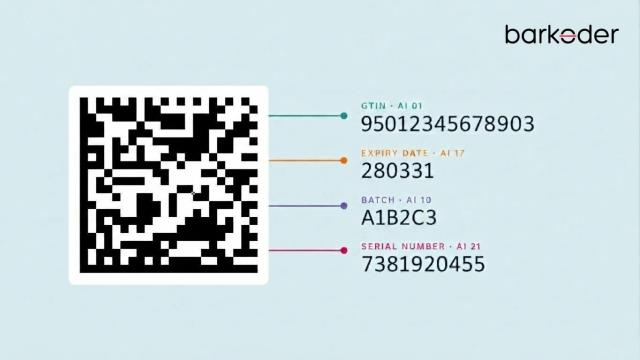
The rules are firm about openness. The data has to be machine-readable and based on open standards, and it has to travel over an interoperable system, so tools from different vendors can read it. The identifier has to follow the ISO/IEC 15459 series of standards, or an equivalent.
There is also a central registry. The EU's digital product passport registry became operational on 20 July 2026. It holds identifiers and registration data, while the battery data itself stays with the responsible company. The company uploads each battery's identifier to the registry.
Not everyone sees everything
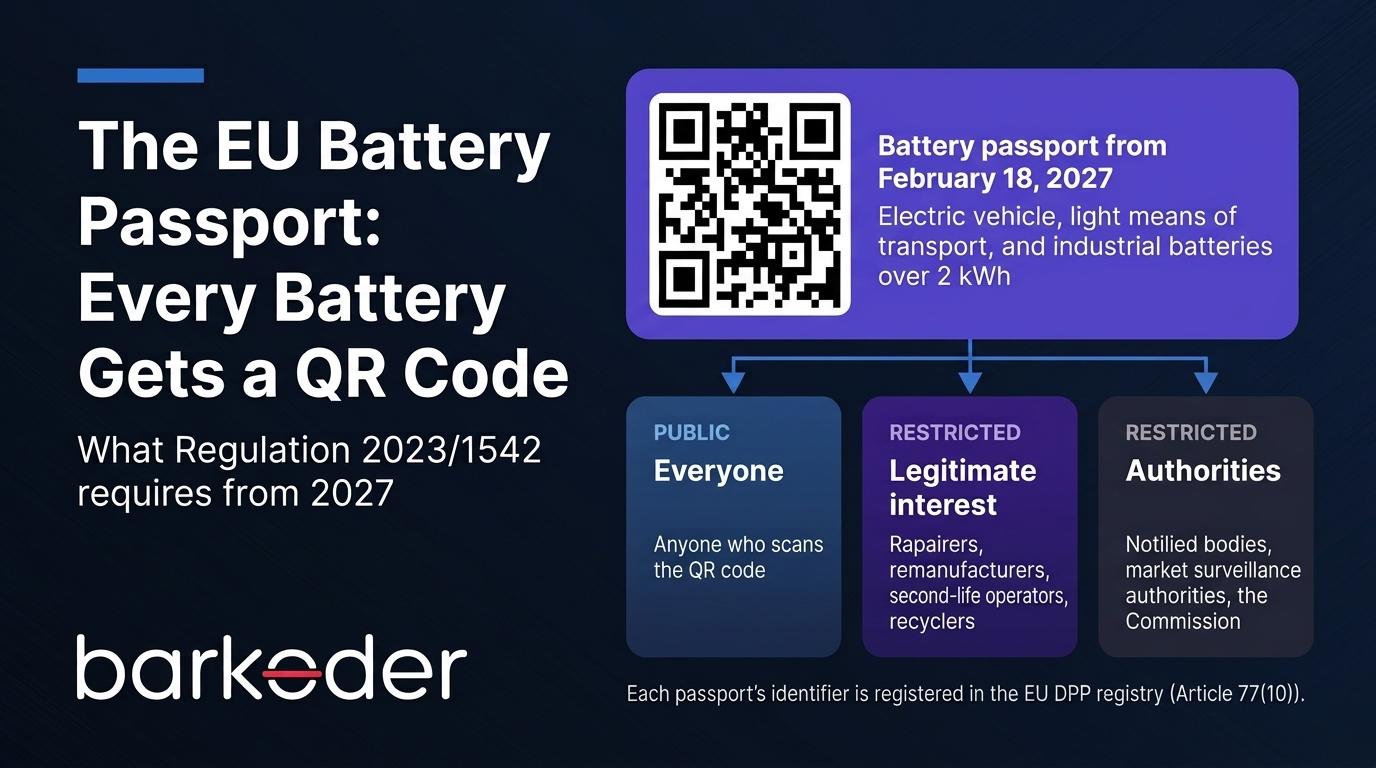
The passport has three levels of access. The same QR code serves all of them, and what you see after the scan depends on who you are.
One QR code, three levels of access. The rules for the legitimate-interest level are still pending.
- Public. Information open to anyone who scans the code.
- Restricted. Notified bodies, market surveillance authorities and the Commission.
- Legitimate interest. Repairers, recyclers and second-life users who need to dismantle a battery safely and know its exact composition. For an individual battery, its holder can also use the passport when making the battery available to independent energy aggregators or energy market participants.
Who counts as having a legitimate interest is meant to be defined by an implementing act. It was due on 18 August 2026 and has not been adopted. The Commission's timetable now lists it for the fourth quarter of 2026. The delay affects that access level, and the start date stays where it is.
A battery has more than one life
Batteries rarely stay in one place. They get repaired, reused, repurposed and remanufactured, and the Regulation covers that. A battery that is reused, repurposed or remanufactured needs a new passport linked to the original one, and responsibility for the data moves to whoever puts it back on the market. When a battery is finally recycled, its passport is deleted.
Where the code gets scanned during a battery's life. The scan points are examples.
Each step is a moment when someone points a camera at the battery. A clerk at a distributor, a technician at a repair shop and a worker at a recycling plant all need the same code to scan quickly, with different lighting, different phones and different amounts of patience.
Where things stand
The date has held so far. At the time of writing, in October 2026:
- Article 77(1) applies from 18 February 2027 whether or not the access-rights act has been adopted.
- The first six harmonised digital product passport standards were referenced on 14 July 2026, and CEN and CENELEC have since published all eight.
- The Commission published updated guidance for digital battery passports on 21 August 2026, including a revised list of data points by battery category.
- The harmonised labelling date of 18 August 2026 depends on a separate implementing act that is also late, so it may move to 18 months after that act enters into force.
- Some industry groups have asked for a delay. None has been announced.
The scanning side doesn't depend on those open items. A QR code on a physical battery has to be read whatever the access rules end up saying, so it can be tested now.
Why these codes are hard to scan
Article 13 says the QR code must be visible, legible and durable, and printed or engraved on the battery. If the battery's type or size doesn't allow or justify that, the code goes on the packaging and the accompanying documents. That wording points to the places where scanning gets difficult.
Four things that make a QR code on a battery harder to read.
- Marked or engraved metal. The code has little contrast against the casing, and the light changes as the phone moves. barKoder's DPM mode is built for Data Matrix and QR engravings on low-contrast or irregular surfaces.
- Curved cells and casings. A code wrapped around a cylinder stretches at the edges. Segment decoding is made for distorted codes.
- Dirt, scratches and wear. Batteries spend years in vehicles, workshops and storage rooms. QR codes carry error correction, which covers some damage, and MatrixSight is barKoder's algorithm for heavily damaged codes.
- Glare. Glossy casings and shrink wrap throw light back into the camera. A small change of angle often fixes it, but nobody wants to do that on every scan. Why Barcode Scanning Fails explains how light affects a scan.
- Several codes in one view. A rack of packs shows dozens of codes, often next to older barcodes. Batch MultiScan reads several at once, and Search & Find looks for the one you need.
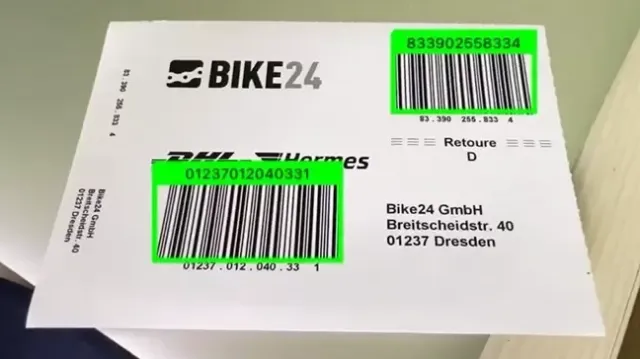
- Codes on boxes and papers. When the code isn't on the battery, the scan happens on packaging or a document, with its own print quality.
barKoder reads the code. Fetching the passport, checking who is allowed to see what and talking to the registry belong to your backend. barKoder doesn't connect to EU systems, and no authority has approved any scanner.
A checklist for app teams
- Treat the scan result as an identifier or a link, and don't assume its format. The CEN and CENELEC standards cover digital identifiers and data carriers, so read them before you write the parser.
- Expect several codes on one battery. Pick the QR code and ignore the rest.
- Test on real housings: engraved, printed, clean and worn, in workshop and warehouse light.
- Keep scanning separate from passport retrieval, and queue the lookups when the connection drops.
- Build the access levels as a setting. A consumer, a repairer and an authority should see different things, and the rules for legitimate interest are still pending.
- Handle the packaging case, where the code sits on a box or a document.
- Check the current dates before launch, because the surrounding acts and standards are still moving.
February 2027 is only a few months away. A good first step is to collect real batteries to test on, from clean new packs to scuffed ones from a workshop shelf, and see how your app copes.