Every year, millions of pets become separated from their owners. Whether a dog escapes through an open gate, a cat wanders too far from home, or a pet becomes lost during travel, finding a way to quickly identify and return animals to their families is a challenge faced by pet owners, shelters, veterinarians, and animal rescue organizations worldwide.
While microchips remain an important identification tool, modern barcode and QR code technologies are creating new opportunities for faster and more accessible pet identification. With advanced mobile scanning solutions such as barKoder, organizations can turn smartphones and tablets into powerful scanning devices capable of instantly accessing pet information through barcodes and QR codes attached to collars, tags, documents, or animal records.
The Growing Need for Better Pet Identification
Pet ownership continues to grow around the world. Dogs and cats are increasingly viewed as family members rather than simply household animals. As a result, owners invest significant time and resources into ensuring their pets remain healthy, safe, and protected.
Despite these efforts, pets can still become lost unexpectedly. Loud noises, storms, accidents, open doors, unfamiliar environments, and travel-related stress can all cause animals to wander away from their owners. In many situations, the faster a pet can be identified, the greater the chance of a successful reunion.
Traditional identification tags provide basic information, but they often have limited space. QR codes and barcode systems can connect rescuers directly to detailed digital profiles containing contact information, medical details, vaccination records, emergency contacts, and special care instructions.
How Barcode and QR Code Pet Identification Works
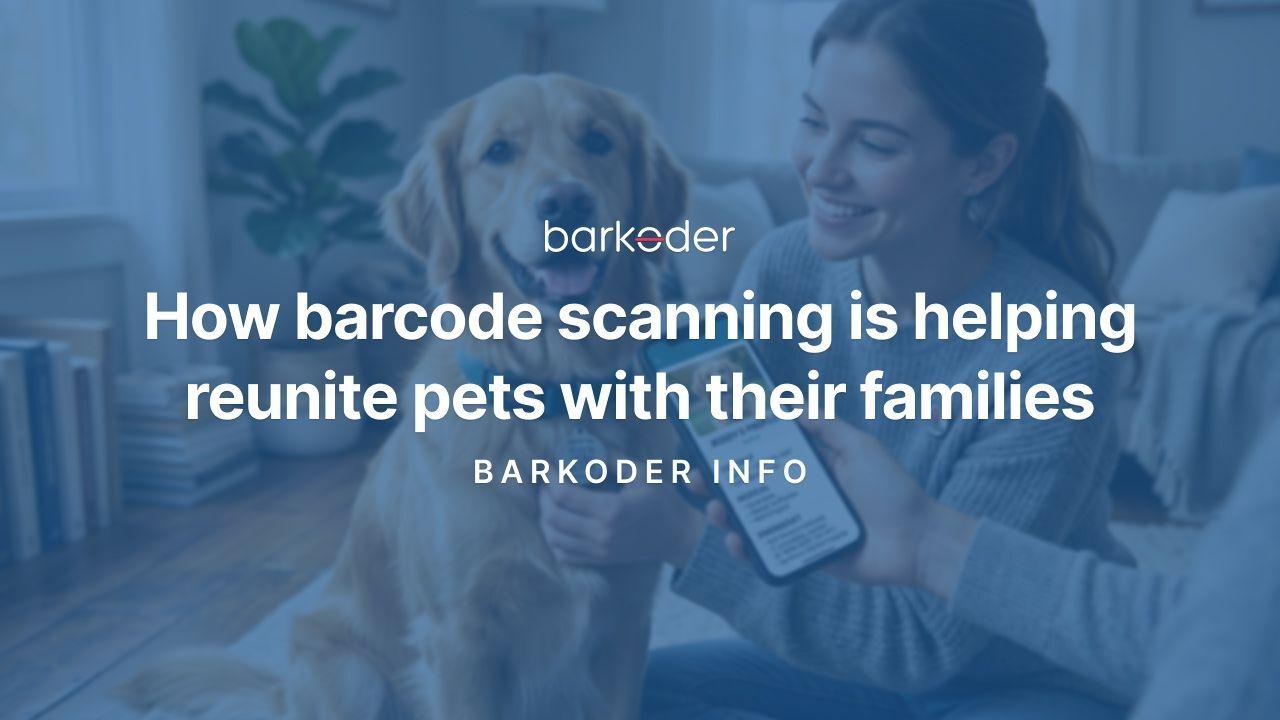
The concept is simple yet highly effective. A pet wears a collar tag containing a QR code or barcode linked to a secure online profile. When someone finds the animal, they can scan the code using a smartphone equipped with a scanning application powered by technologies such as barKoder.
Within seconds, important information becomes available, allowing the finder to contact the owner or access instructions on how to safely assist the pet. Unlike manually entering identification numbers or searching databases, scanning provides instant access to information, reducing delays and increasing the likelihood of a quick return.
This approach is particularly valuable because smartphones are now widely available. Almost anyone who finds a lost pet can perform a scan without requiring specialized equipment.
Supporting Animal Shelters and Rescue Organizations
Animal shelters often manage hundreds or even thousands of animals each year. Keeping accurate records for intake, vaccinations, medical treatments, adoptions, and transfers requires significant administrative effort.
Barcode scanning helps streamline these processes by allowing staff to instantly retrieve animal records. Each animal can be assigned a unique barcode linked to its digital profile. When staff scan the code, they immediately access information about health history, vaccination status, feeding requirements, medications, behavioral notes, and adoption availability.
This reduces paperwork, minimizes errors, and improves operational efficiency. Staff spend less time searching through records and more time caring for animals.
For rescue organizations operating with limited resources, mobile barcode scanning provides a cost-effective solution that leverages devices they already own.
Improving Veterinary Clinic Workflows
Veterinary clinics handle large amounts of information every day. Patient records, treatment plans, prescriptions, vaccinations, laboratory results, and follow-up appointments must all be managed accurately.
Barcode systems can simplify many of these tasks. By attaching a barcode or QR code to an animal's file or identification tag, veterinary professionals can quickly access patient information during appointments.
This improves workflow efficiency and helps reduce the possibility of administrative mistakes. Veterinarians can spend more time focusing on animal care and less time navigating manual record systems.
Scanning technology also supports medication management, ensuring that treatments are properly documented and associated with the correct patient.
Faster Reunions for Lost Pets
One of the most powerful benefits of barcode-based identification is speed.
When a lost pet is found, every minute matters. Traditional methods often involve contacting local shelters, checking social media groups, posting notices, or waiting for a microchip scan. While these methods remain valuable, QR codes can provide an immediate connection between the finder and the owner.
A simple scan may instantly display contact information, emergency instructions, and alternative contacts if the owner cannot be reached directly.
This rapid access to information can significantly reduce the time a pet spends away from home and lower stress levels for both the animal and its family.
Enhancing Pet Travel and Boarding Services
Pet boarding facilities, groomers, daycare centers, and transportation providers can also benefit from barcode scanning technology.
Managing multiple animals simultaneously requires accurate identification to avoid mix-ups. Barcode-enabled records allow staff to verify feeding schedules, medication requirements, vaccination records, and owner instructions quickly and accurately.
During busy periods, scanning helps ensure every animal receives the correct care while reducing administrative complexity.
For pet owners, this provides additional confidence that their pets are being managed safely and professionally.
Better Data Management and Record Accuracy
Paper-based systems can be difficult to maintain, especially when organizations manage large numbers of animals. Information may become outdated, misplaced, or difficult to access when needed most.
Barcode scanning supports digital record management by providing a simple way to connect physical identification with electronic information. Updates can be made instantly, ensuring records remain accurate and current.
Whether tracking vaccinations, medical procedures, adoption status, or ownership details, digital systems supported by barcode scanning help organizations maintain higher levels of accuracy and efficiency.
Why Mobile Scanning Matters
One of the biggest advantages of modern scanning technology is accessibility. Organizations no longer need expensive dedicated scanners for every workflow.
With solutions such as barKoder, smartphones and tablets can become powerful scanning tools capable of reading a wide range of barcode and QR code formats. This reduces hardware costs while providing flexibility for shelters, clinics, rescue groups, and pet service providers.
Reliable scanning performance is especially important in real-world situations where tags may be scratched, partially damaged, dirty, or viewed under challenging lighting conditions. Advanced scanning technology helps ensure information remains accessible when it matters most.
The Future of Connected Pet Care
As digital technologies continue to evolve, barcode and QR code systems are expected to play an increasingly important role in pet care and animal welfare. Future applications may integrate location services, digital health records, adoption platforms, vaccination management systems, and emergency response tools into a single connected ecosystem.
For pet owners, this means greater peace of mind. For shelters and veterinary professionals, it means improved efficiency and better outcomes. Most importantly, it means more lost pets finding their way home.
Barcode scanning may seem like a simple technology, but its impact on animal identification, welfare, and reunification can be profound. By combining digital information with fast mobile scanning capabilities, solutions like barKoder are helping create a safer, smarter, and more connected future for pets and the people who care for them.