
The Barcode Journey of a Diamond: From Deep Underground to the Jewelry Store
Discover how barcode scanning helps track diamonds from mining and transportation to cutting, certification, and retail, ensuring traceability and trust.
Read about barKoder latest news, updates and tutorials.
Discover how barcode scanning helps track diamonds from mining and transportation to cutting, certification, and retail, ensuring traceability and trust.
We are incredibly thrilled to share a major milestone in our mission to redefine enterprise mobility and high-performance data capture. barKoder has officially joined the Zebra Technologies PartnerConnect program as a Registered Independent Software Vendor (ISV) Partner.
While museum visitors marvel at beautifully lit galleries, an intricate logistical operation hums quietly behind the scenes. Millions of priceless artifacts - from ancient manuscripts to dinosaur fossils - must be constantly tracked, conserved, and secured. This article explores how barcode scanning, a tool traditionally associated with grocery stores and warehouses, has become an essential technology for global museums to safeguard humanity's cultural heritage.

Discover the true story of how NASA uses barcode technology to track spacecraft parts, tools, and equipment, ensuring mission success and safety.
Barcode and QR code scanning are making pet identification faster, smarter, and more reliable. By attaching a scannable tag to a dog's or cat's collar, owners can provide instant access to contact details, medical information, and emergency instructions. Solutions like barKoder help shelters, veterinarians, and pet owners quickly identify animals, improve record management, and increase the chances of reuniting lost pets with their families.

Barcodes do more than identify products; they ensure global traceability.
GS1 DataMatrix and GS1 QR Code may look similar, but choosing between them is a strategic decision.
Whether you need back-end precision or consumer engagement, knowing where each thrives is key.
National Barcode Day celebrates the first commercial barcode scan in 1974 and the technology that transformed modern business. Today, barcodes and QR codes are used worldwide for retail, logistics, healthcare, ticketing, and more. Solutions like barKoder help businesses scan codes quickly and accurately using mobile devices, making everyday operations faster and more efficient.

Barcode and QR code scanning are essential technologies for FIFA World Cup 2026. From digital ticketing and stadium access to merchandise sales and security verification, scanning solutions like barKoder help deliver faster, safer, and more efficient experiences for millions of fans worldwide.

barKoder helps car rental companies improve fleet management, vehicle tracking, maintenance operations, and customer experiences through fast and reliable mobile barcode scanning. By turning smartphones and tablets into powerful scanning tools, rental businesses can reduce manual work, increase efficiency, and streamline daily operations.
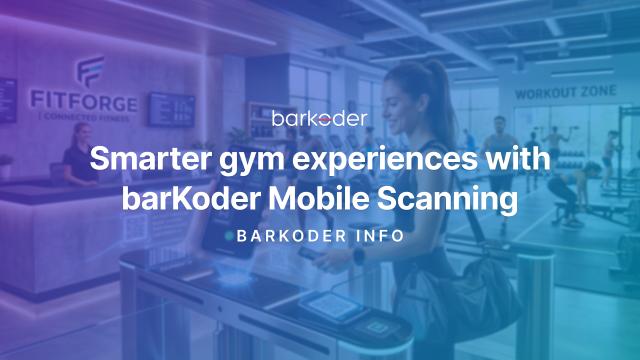
Modern gyms are increasingly using mobile barcode and QR code scanning to improve member experiences and streamline daily operations. With barKoder, fitness centers can turn smartphones into powerful scanning devices for member check-ins, access control, class attendance, retail purchases, and equipment tracking.

We are thrilled to announce a major milestone in our company's journey to accelerate this vision: Keo Sar has officially joined barKoder as our Strategic Growth Advisor.

With the emergence of enterprise-grade software solutions like the barKoder Barcode Scanner SDK, businesses are transitioning away from bulky physical hardware. By integrating an intelligent VIN scanning engine directly into mobile or web-based applications, organizations can transform standard smart device cameras into powerful, industrial data-capture tools.