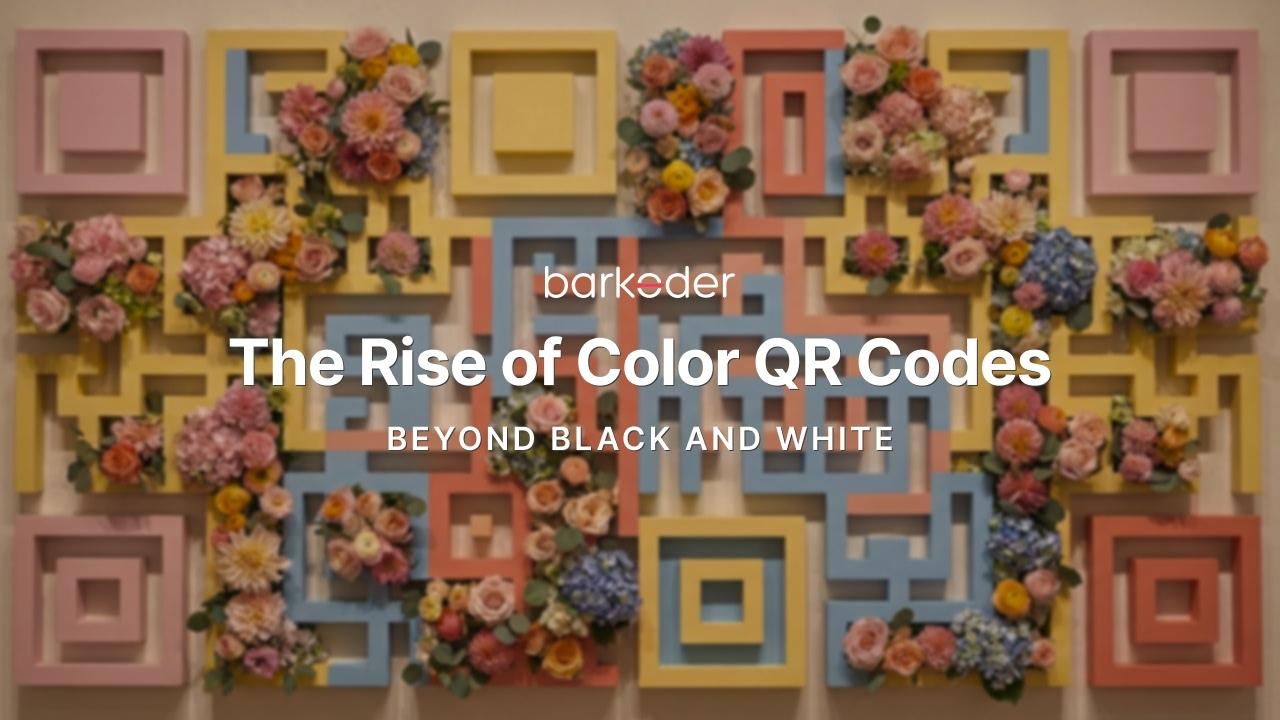
Black-and-white squares are no longer the only format for QR codes. When properly designed, color QR codes offer flexibility, improved visual integration, and stronger branding without compromising scannability. The design and application of QR codes have changed along with digital experiences, evolving from purely functional symbols to visually integrated components of contemporary communication.
High contrast and machine readability were the only considerations when QR codes were first created in the mid-1990s for industrial tracking. Strict black-on-white designs were necessary for early scanners and cameras to guaranty accurate decoding. QR codes progressively grew beyond their initial limitations as smartphone cameras, image processing, and decoding algorithms advanced. Color, inverted patterns, and branded designs became feasible and dependable as a result of this technological advancement.
The demands of marketing, retail, and user experience led to the natural evolution of color QR codes. Instead of being intrusive or purely technical, brands desired QR codes that felt purposeful and visually consistent with their brand. Designers were able to produce QR codes that blended in with packaging, advertisements, tickets, and digital screens by adding color while maintaining contrast and structure.
This article explains what color QR codes are, how they function, and the best ways to keep them simple to scan in practical settings. We also describe how barKoder transforms contemporary design into dependable performance by utilizing cutting-edge image processing and decoding technology to handle a variety of colors, lighting conditions, and backgrounds.
What Are Color QR Codes?
Color QR codes are QR codes that use colors instead of the traditional black-and-white design while preserving the same underlying data structure and functionality. Rather than relying solely on black modules on a white background, color QR codes can incorporate brand colors, gradients, inverted patterns, or colored backgrounds to better align with modern design and branding needs.
Color QR codes function similarly to regular QR codes despite their visual differences. In order for scanning software to detect the pattern, there must be enough contrast between the QR modules and the background. When properly created, color QR codes offer more flexibility, a more appealing appearance, and better integration into packaging, digital experiences, and marketing materials. They are also just as dependable as traditional ones.
Color QR codes can now be accurately decoded across a variety of devices, lighting conditions, and real-world environments thanks to advancements in camera technology and scanning engines like barKoder, allowing brands to combine creativity with reliable performance.
Instead of using the conventional black modules on a white background, color QR codes use colors.They could consist of:
- Brand colors
- Gradient effects
- Colored backgrounds
- Inverted or multi-color modules
When created and scanned properly, color QR codes function just as well as standard ones while offering a more modern and branded appearance.
Why Use Color QR Codes?
1. Stronger Branding
Instead of appearing as a technical addition, color QR codes can blend in with your brand identity to make them feel like an organic component of your design. Businesses can easily incorporate QR functionality into packaging, marketing materials, and digital experiences by utilizing brand colors, tones, or gradients. Every scan feels deliberate and in line with the brand's visual language thanks to this consistency, which strengthens brand recognition and trust. Over time, this improves consumer familiarity and produces a more unified experience throughout all touchpoints.
2. Better Visual Engagement
On posters, packaging, and digital screens, colored codes stand out more, making them more likely to be scanned. Retail shelves, event signage, and online promotions are examples of crowded visual environments where competition is fierce and attention is scarce. The eye is naturally drawn to a well-designed color QR code, which aids brands in capturing attention more quickly, directing user attention, and promoting interaction. Higher scan rates and increased interaction with digital content are frequently the results of this increased visibility.
3. Design Flexibility
Color QR codes don't interfere with the esthetics of marketing materials, product labels, tickets, or user interfaces. In order to incorporate QR codes into layouts while preserving esthetic balance and clean composition, designers have more creative freedom. Color QR codes make scannable functionality feel contemporary and intentional, improving rather than diminishing the overall user experience, whether they are utilized in bold campaigns or simple designs.
Challenges with Color QR Codes
While visually appealing, color QR codes introduce a few technical challenges:
- Low contrast between foreground and background
- Overuse of gradients or patterns
- Poor lighting or reflections during scanning
To ensure reliable scanning, contrast and clarity are more important than color creativity.
Best Practices for Color QR Codes
- Maintain high contrast between code modules and the background
- Avoid very light colors for the QR pattern
- Keep the "quiet zone" (margin) clear
- Test your QR code across multiple devices
How barKoder Handles Color QR Codes
barKoder is designed to accurately decode QR codes, regardless of changes in backgrounds, colors, or lighting. Using barKoder, you obtain:
- Advanced image processing for colored and inverted QR codes
- High performance in low-light or complex backgrounds
- Support for real-world scanning scenarios (print, screen, packaging)
- Fast and reliable decoding across platforms
Whether your QR code is black-and-white or fully branded in color, barKoder ensures consistent results.
Color QR Codes in Real-World Use
Color QR codes are commonly used for:
- Product packaging: While maintaining a strong visual alignment with brand identity, brands use color QR codes on packaging to offer product details, instructions, authenticity verification, promotions, or sustainability information.
- Marketing campaigns: Color QR codes make print ads, billboards, fliers, and digital promotions stand out, increase traffic to landing pages, and improve engagement tracking through scan analytics.
- Event tickets and passes: Color QR codes, which provide quick scanning, visual distinction, and a more upscale experience for attendees, are frequently used for event access, check-ins, and digital passes.
- Restaurant menus: To enhance convenience and presentation, restaurants use color QR codes to match their branding and provide customers with instant access to digital menus, ordering systems, and promotions.
- App downloads and payments: Color QR codes streamline digital transactions, mobile payments, and app installations, making the process quicker and easier while bolstering trust with recognizable brand colors.
When paired with a powerful scanning engine like barKoder, they combine performance and esthetics.
Analytics: Measuring the Performance of Color QR Codes
The effectiveness of your color QR codes is determined by analytics; design is only half the story. While eye-catching graphics draw attention, data shows how users actually interact with your codes in practical settings. Businesses can clearly see what works and what doesn't by monitoring performance metrics like scan frequency, device type, location, and interaction time.
Teams can improve visibility and usability by using analytics to optimize QR code placement, color contrast, size, and surrounding call-to-action messaging. In order to make better choices for upcoming campaigns, they also assist in identifying high-performing channels, peak engagement periods, and audience behavior patterns. Even the most visually appealing QR code becomes a guess rather than a strategy in the absence of analytics.
When combined with reliable scanning technology, analytics transform color QR codes into measurable, data-driven tools that continuously improve engagement, conversion rates, and overall campaign effectiveness.
Key Metrics to Track
When using color QR codes in campaigns, focus on these analytics:
- Scan Rate – Number of scans relative to impressions
- Unique vs. Total Scans – Measures reach versus repeat engagement
- Time & Date of Scan – Identifies peak engagement periods
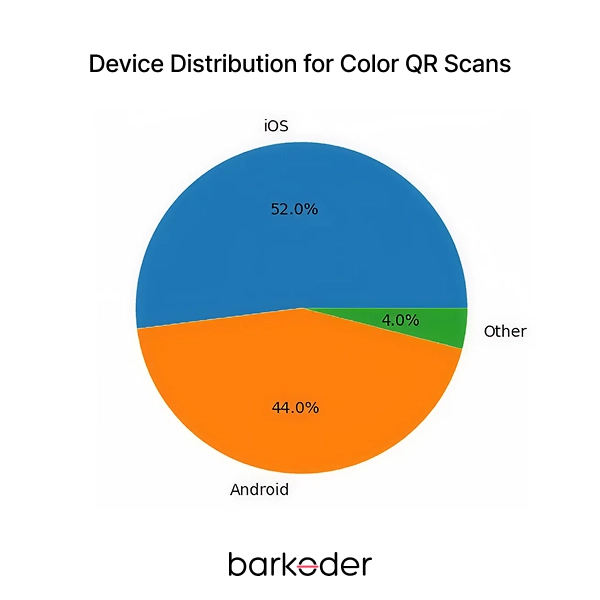
- Device & OS Data – Helps optimize for real-world user devices
- Location Data – Reveals where your QR codes perform best
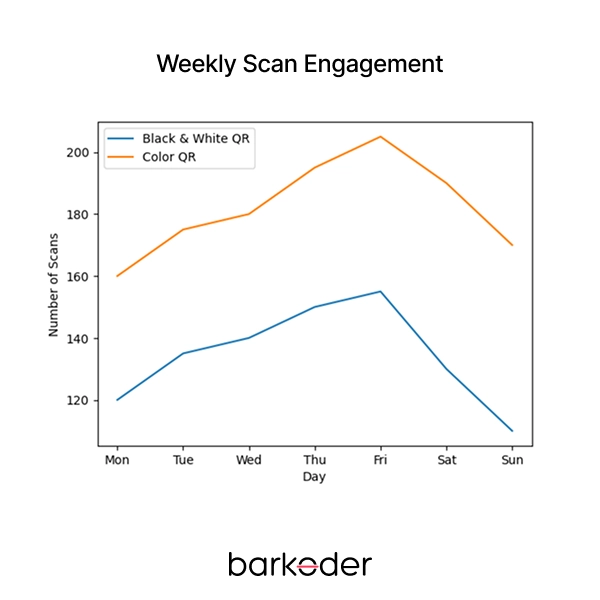
Color Impact on Engagement
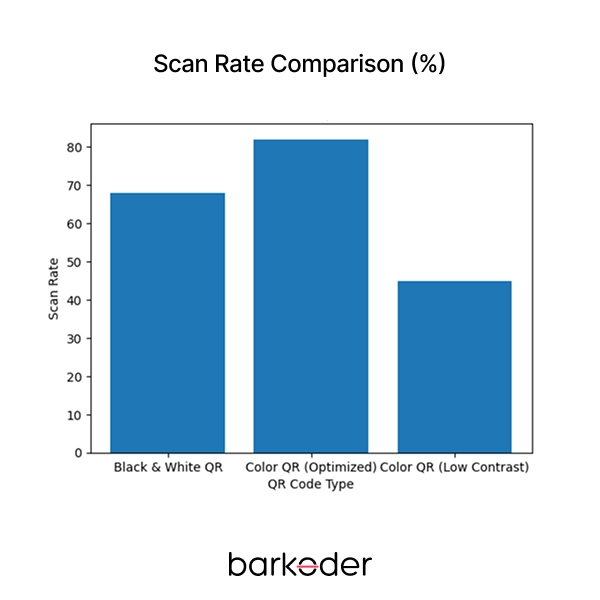
Analytics often show that well-designed color QR codes can outperform traditional black-and-white codes when:
- Brand colors increase trust and recognition
- Visual contrast remains strong
- The QR code is clearly integrated into the surrounding design
Poor contrast or overly artistic designs, however, can reduce scan success—making analytics essential for validation.
A/B Testing with Color QR Codes
To maximize performance, run A/B tests using:
- Different color combinations
- Colored vs. black-and-white versions
- Placement variations (center vs. corner, print vs. screen)
Analytics results help determine which designs deliver higher scan reliability and engagement.
barKoder and Scan Analytics
While barKoder focuses on fast and accurate decoding, it seamlessly fits into analytics-driven workflows by:
- Ensuring high scan success rates across color variations
- Reducing failed scans that distort campaign data
- Supporting consistent results across devices and environments
Reliable scanning means your analytics reflect real user behavior, not technical limitations.
Extended Use Cases for Color QR Codes
Beyond marketing, color QR codes powered by Barkoder are effective in:
- Logistics and smart packaging
- Retail shelf labeling
- Authentication and anti-counterfeiting
- Smart posters and interactive signage
In each case, analytics provide insights that drive continuous improvement.
Design boldly. Measure intelligently. Scan reliably with barKoder.