One of the most crucial tools for digital transformation in businesses, governments, transportation networks, healthcare providers, manufacturers, retailers, and logistics companies is barcode and QR code technology. Barcode scanning is essential for enabling quick, precise, and secure data collection as nations continue to invest in digital infrastructure.
The same requirements apply to organizations operating in the European Union (EU), NATO member states, or the BRICS countries: instantaneous information capture, the elimination of manual data entry, increased operational efficiency, and high security.
With the advent of powerful enterprise smartphones, businesses can now perform professional-grade barcode scanning without spending a lot of money on specialized hardware. This is where barKoder shines, offering enterprise-grade barcode scanning directly on mobile devices with remarkable speed, accuracy, and dependability.
The Global Shift Toward Mobile Barcode Scanning
Initiatives for digital transformation are expanding globally. Workflows based on paper are being replaced by digital systems that can process information instantly.
Employees can instantly gather precise data using mobile barcode scanning on devices they already carry around on a daily basis. Identification numbers, shipment codes, inventory information, tickets, and credentials don't need to be manually entered; a quick scan can obtain the necessary data in milliseconds.
This method greatly lowers operating costs, decreases errors, speeds up processing, and enhances customer satisfaction.
Barcode technology is no longer an optional convenience as businesses and governments update their digital infrastructure.
Why Barcode Scanning Matters Across Different Regions
The operational difficulties are strikingly similar, despite the fact that every nation has its own laws and norms.
Secure personnel identification, document authentication, product tracking, inventory management, shipment verification, ticket processing, access control, asset monitoring, and workflow automation are all necessary for organizations.
These problems are resolved by barcode scanning, which is a universal technique for accurately and quickly encoding data.
Organizations can effectively exchange information across borders while preserving system compatibility because barcode standards are widely accepted.
Digital Government Services
Digital services that streamline citizen-government interactions are being introduced by numerous public institutions.
Appointment confirmations, digital certificates, permits, tax documents, payment references, and public service portals are all increasingly using barcodes and QR codes.
Employees can quickly retrieve information by scanning a barcode rather than manually entering lengthy identification numbers.
Agencies can increase processing speed and reduce human error by integrating barKoder into government applications.
Border Control and Identity Verification
Verification that is both fast and safe is essential during overseas travels.
Every day, border guards process millions of passports and documents. Machine readable zones (MRZ), PDF417 barcodes, and QR codes containing important data are common in various documents.
With barcode scanning on mobile phones, it is possible to access the encoded data quickly, making the process faster and more accurate.
BarKoder scans different barcode types often used in official documents, ID cards, passports, and visas.
NATO Operations and Secure Identification
A NATO mission consists of collaboration between many member states, and thus there needs to be secure identification and an efficient flow of information.
Barcode scanning is utilized for accreditation processes, visitor management, logistical management, equipment identification, maintenance management, warehouse management, and access control.
Many military workers, contractors, visitors, and suppliers are provided with QR code or barcode-enabled credentials that allow instant verification through secure mobile apps.
Quick scanning leads to reduced waiting time with the security protocol still in place.
Since mobile devices have been used more frequently in field missions, a barcode scanning solution that does not need any specialized hardware has become important.
Supply Chain Modernization Across Europe
For the Europeans, there is a huge reliance on the barcode system at all levels of the manufacturing process.
The scanning happens at manufacturing, packaging, warehousing, transportation, custom process, retailing, and final delivery.
Scanning ensures real-time recording of products in stock control systems, making it possible for organizations to trace their products from production stage to consumers' hands.
Implementation of barKoder in warehouse software makes it possible for employees to scan barcodes that are difficult to scan.
Healthcare Digitalization
Healthcare systems are increasing their efforts in managing patients digitally and monitoring medications digitally.
Hospitals will be able to scan wristbands, lab samples, medication labels, prescriptions, medical devices, and inventory.
Precise scanning of barcodes will decrease medication errors and make the whole process safe for patients.
Scanners should work efficiently in any lighting condition and any type of device.
Quick decoding will help healthcare providers to concentrate more on patient treatment.
Manufacturing and Industrial Automation
Manufacturers are now turning to barcodes to help automate the manufacturing process.
Barcodes can identify parts as they move through manufacturing, quality control, packaging, and shipping.
It allows for more accurate and faster tracking than writing down part numbers manually.
Where seconds count in a production line, the performance of the scanner makes the difference.
Fast-scanning allows operators to keep up with the flow of work.
Retail Transformation
Retailers have integrated the use of mobile bar code scanning in functions such as inventory management, shelf auditing, product identification, mobile check out, loyalty and customer relationship management.
The staff is able to identify inventory instantly while the customers get quick checkout service.
Barcode standards in retail companies working in several countries are standardized irrespective of language and location.
Transportation and Public Mobility
Transporters are turning to QR codes for digital tickets and authentication of passengers.
Passengers use their smartphones to scan their tickets prior to boarding the trains, buses, ferries, or any other form of public transport.
The transport operators gain from faster boarding, lower risk of fraud, and better passenger flow.
Barcodes can help in bag tracking, fleet management, and cargo handling.
Warehousing and Logistics
Modern logistics companies move millions of packages each day.
Each package can be scanned several times along its journey from collection to delivery.
Accuracy and speed are vital since even a little delay accumulates when thousands of packages move each day.
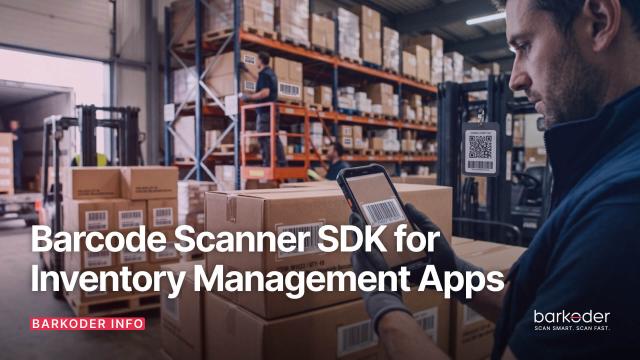
Mobile barcode scanning enables warehouse employees to do receiving, picking, packing, inventorying, and shipping jobs with their normal smartphones rather than special scanners.
Asset Tracking
Companies that handle thousands of tangible items need accurate identification of those items during their lifetime.
The equipment, computers, vehicles, machinery, medical devices, tools, and infrastructure parts may have permanent barcodes.
Barcodes allow the company to track maintenance history, owner history, inspections, calibration requirements, and location.
Barcodes help to avoid equipment loss and improve accountability.
Secure Access Control
QR credential codes are widespread in office complexes, manufacturing plants, governmental agencies, conferences, sporting events, and secure campuses.
Visitors are issued with QR codes which are easily verified.
Rather than manually cross-referencing physical documents, security officers simply need to scan the code.
The process of verification is quick.
The Growing Importance of Mobile SDKs
Enterprises tend to develop their own custom enterprise applications instead of using generic applications.
The barcode scanning SDK makes it possible to add professional-level scanning capabilities to the Android, iOS, Flutter, React Native, MAUI, Xamarin, Capacitor, Ionic, JavaScript, and many more platforms.
Developers do not need to spend time on the development of computer vision algorithms and can concentrate on the development of business functionalities.
Why Developers Choose barKoder
Performance is perhaps the most crucial aspect when choosing a barcode scanner.
There are situations where barcode scanning must be done under unfavorable conditions, which include:
- Poor illumination
- Motion blur
- Small barcodes
- Long-distance scanning
- Degraded labels
- Barcodes on curved surfaces
- Low contrast printing
- High density barcode symbology
BarKoder was developed to deliver reliable performance under these tough conditions while retaining high decoding speed.
The SDK can decode numerous one-dimensional and two-dimensional barcode symbologies; thus, it is ideal for enterprise level use cases in the health care sector, transport and logistics, manufacturing, retailing, and public services as well as secure access control.
Its mobile first architecture allows enterprises to turn regular phones into barcode scanning devices.
Supporting Digital Transformation Worldwide
Digital transformation is not limited to one geographic region. Whether organizations operate in the European Union, NATO member countries, or BRICS economies, the objectives remain remarkably similar: improve efficiency, reduce manual work, enhance security, and deliver better digital experiences.
Barcode scanning has become one of the foundational technologies enabling these goals. By converting printed information into instantly accessible digital data, organizations can automate workflows, increase productivity, and improve accuracy across countless industries.
As mobile technology continues to evolve, barcode scanning will remain a key component of modern enterprise applications. Solutions like barKoder help developers and organizations deploy fast, accurate, and reliable scanning capabilities across a wide range of devices and use cases, supporting digital transformation wherever it takes place.