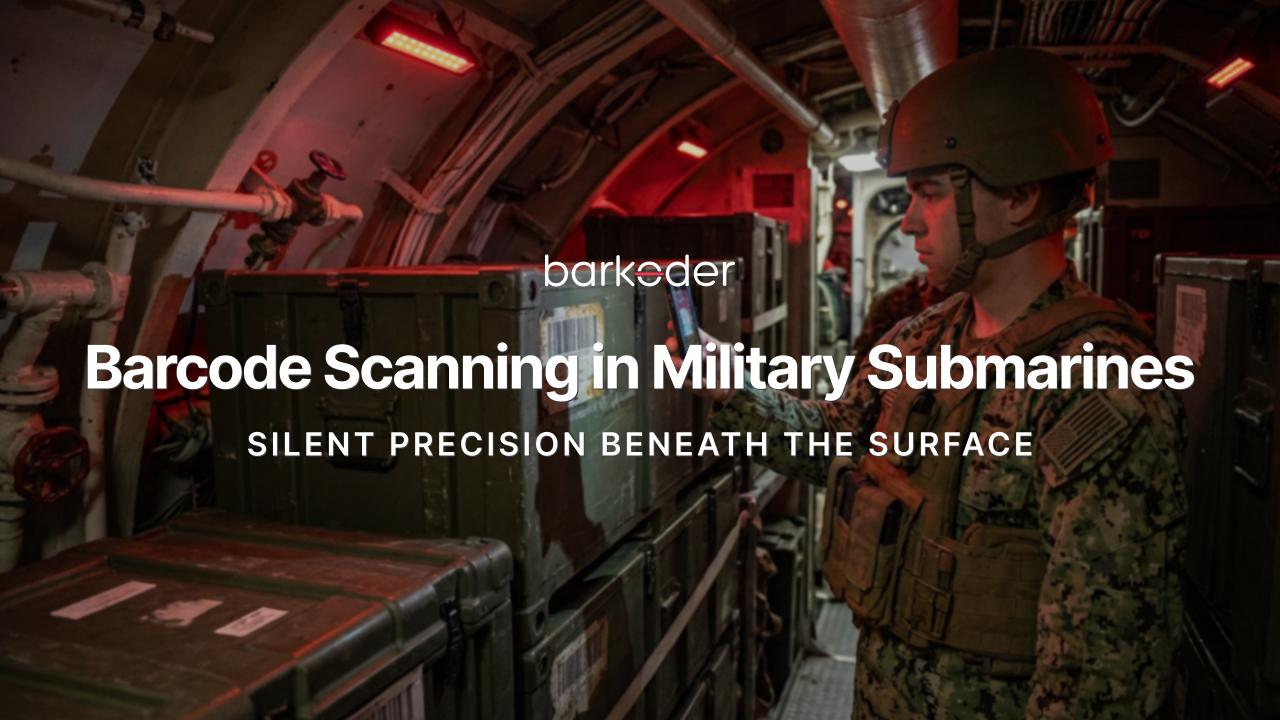
Military submarines operate in one of the harshest environments on Earth, deep beneath the ocean's surface. Every process must be traceable, every system must operate flawlessly, and every decision must be supported by precise data. In this regard, barcode scanning-which is sometimes disregarded-is essential to submarine logistics, maintenance, and operational preparedness.
Space inside a submarine is measured in centimeters rather than meters. It is necessary to store thousands of parts precisely, from replacement valves and electronic modules to medical supplies and emergency equipment. Not only can a misplaced or untracked part be inconvenient, but it can also cause delays in repairs, jeopardize a mission, or compromise safety. This complexity is turned into order by barcode scanning, which enables crews to quickly locate, identify, and confirm important items even in high-pressure situations.
Submarines cannot depend on continuous connectivity, in contrast to surface operations. Systems must operate securely, silently, and offline. Submarine barcode scanners are therefore built to operate without cloud access, syncing data only when secure connections become available. This guaranties the accuracy of equipment histories, maintenance logs, and inventory records during extended underwater deployments.
Barcode scanning really becomes a silent protector during maintenance. Each submarine component has a service life, a schedule for inspections, and a requirement for compliance. Crews create an uninterrupted digital trail by scanning barcodes during inspections or part replacements, documenting who completed the task, when it was completed, and which component was used. This degree of traceability lowers human error, promotes preventive maintenance, and aids commanders in making well-informed decisions regarding system readiness.
The submarine environment also pushes technology to its limits. Low light, vibration, confined spaces, and protective gear can make manual data entry impractical. Barcode scanning offers speed and reliability where keyboards and paperwork fail. A single scan can replace multiple steps, saving time during critical operations and reducing cognitive load on crew members.
The story is further complicated by security. Data related to submarine logistics is extremely sensitive. Only authorized personnel are able to scan, view, or alter data thanks to the integration of access controls and encrypted software platforms with modern barcode systems. In this sense, barcode scanning promotes national security, operational secrecy, and efficiency.
Barcode scanning is increasingly used in conjunction with mobile devices, rugged tablets, and specialized SDKs that directly integrate into onboard systems as naval fleets modernize. By highlighting usage patterns, anticipating part failures, and assisting with mission planning well in advance of problems, these tools transform raw scan data into actionable intelligence.
Barcode scanning is rarely noticed in the quiet world beneath the waves. However, it keeps submarines safe, effective, and mission-ready scan by scan. It serves as a reminder that even with the most sophisticated military technology, dependability frequently depends on straightforward concepts carried out perfectly-evidence that sometimes the smallest tools carry the greatest responsibility.
Why Barcode Scanning Matters in Submarine Operations
Military submarines are intricate, independent ecosystems. Missions are lengthy, space is scarce, and resupply opportunities are infrequent. Crews are always aware of exactly what is on board thanks to barcode scanning, which makes it possible to precisely track thousands of parts, consumables, and vital assets.
Every item on board a submarine, including food supplies, medical kits, spare mechanical parts, and electronic modules, must be meticulously accounted for prior to deployment and continuously observed during the mission. By giving real-time visibility into stock levels, usage rates, and remaining reserves, barcode-based inventory systems do away with guesswork. In an already cramped setting, this enables crews to strategically plan consumption and prevent shortages as well as needless overstocking.
Even minor inefficiencies can become major hazards during prolonged underwater operations. By simplifying inventory checks and cutting down on labor-intensive, human error-prone manual logging, barcode scanning helps avoid this. Crew members can concentrate on operational duties rather than administrative work when a fast scan verifies item identity, quantity, and storage location.
Additionally, barcode tracking helps with preparedness and mission planning. Commanders can more accurately forecast which components and supplies are most important for upcoming missions by examining scanned data from prior deployments. This data-driven strategy increases overall operational efficiency, lowers waste, and makes better loadout decisions.Modern barcode scanning solutions are made to function dependably in these harsh environments, particularly software-based scanning SDKs operating on rugged mobile devices. Even in situations where visibility is restricted by low light, condensation, or small physical spaces, sophisticated decoding algorithms are able to read 1D and 2D barcodes that are damaged, low contrast, or partially obscured.
Mobile SDKs use robust onboard cameras and real-time image processing to automatically adjust to changing environments, in contrast to traditional scanners. They can maintain quick and precise scan performance while compensating for motion, vibration, and uneven lighting-common realities inside a submarine. Because of this flexibility, crew members can quickly scan components without the need for ideal conditions or perfect alignment.The confidence that every asset is accounted for contributes directly to safety, reliability, and mission success.
In a world where submarines must operate independently for weeks or months at a time, barcode scanning acts as a quiet but essential system—maintaining order, visibility, and control deep beneath the surface, where precision is not optional, but essential.
Key objectives include:
- Accurate inventory management in confined spaces
- Traceability of spare parts and critical systems
- Maintenance history tracking for safety‑critical equipment
- Reduced human error during high‑stress operations
In an environment where mistakes can compromise mission success—or lives—reliable data capture is essential.
Extreme Conditions Require Reliable Scanning
Submarines present unique challenges for scanning technology:
- Low or inconsistent lighting
- Vibration and constant motion
- Humidity and temperature variations
- Strict electromagnetic and security constraints
Modern barcode scanning solutions are made to function dependably in these harsh environments, particularly software-based scanning SDKs operating on rugged mobile devices. Even in situations where visibility is restricted by low light, condensation, or small physical spaces, sophisticated decoding algorithms are able to read 1D and 2D barcodes that are damaged, low contrast, or partially obscured.
Mobile SDKs use robust onboard cameras and real-time image processing to automatically adjust to changing environments, in contrast to traditional scanners. They can maintain quick and precise scan performance while compensating for motion, vibration, and uneven lighting-common realities inside a submarine. Because of this flexibility, crew members can quickly scan components without the need for ideal conditions or perfect alignment.
Software-based scanners can be tightly integrated into safe onboard systems, which is equally important. The device processes scan data locally, minimizing the need for external connectivity and meeting stringent security regulations. Data can be transferred in controlled, encrypted sessions when synchronization is necessary, maintaining confidentiality and operational integrity.
These intelligent, mobile scanning solutions are becoming a perfect fit for submarines as they continue to evolve. They combine precision, durability, and adaptability in settings where technology must always operate flawlessly.
Use Cases Aboard Military Submarines
Inventory and Supply Chain Control
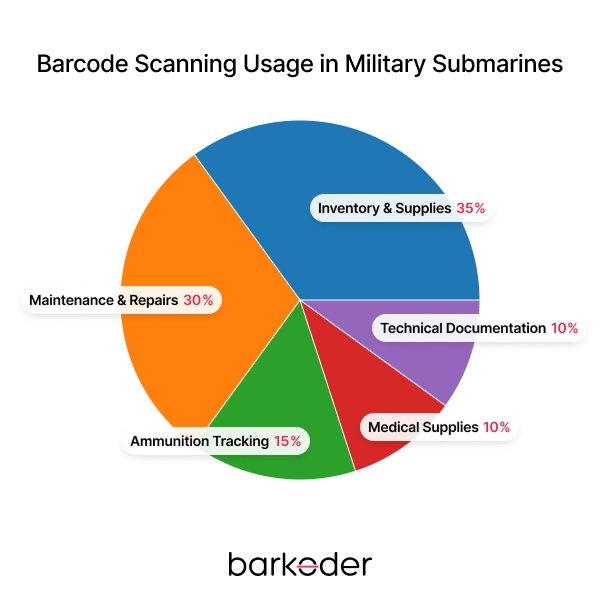
Precise management of supplies, from food and medical kits to mechanical and electronic parts, is essential to every mission. Even small inventory errors can have major repercussions in a submarine setting where resupply is impossible and error margins are extremely small. The precision and visibility required to confidently manage these resources are provided by barcode scanning.
Through the incorporation of barcode scanning into routine tasks, crew members can:
- Track inventory consumption in real time
- Prevent shortages of mission‑critical items
- Optimize storage and resupply planning
Maintenance and Lifecycle Management
To guaranty dependability, security, and long-term operational readiness, submarine systems need strict maintenance schedules. Every component, regardless of size, has specified replacement cycles, service protocols, and inspection intervals. Barcode scanning removes uncertainty and manual tracking by establishing a direct connection between physical components and their digital maintenance records.
During inspections and repairs, maintenance teams can scan parts to:
- Verification of part authenticity
- Accurate logging of inspections and repairs
- Full lifecycle traceability for safety‑critical equipment
Ammunition and Sensitive Asset Tracking
Additionally, barcode scanning is used to handle regulated and sensitive items, where accountability is required rather than optional. Classified equipment, weapons-related parts, specialized tools, medical supplies, and controlled materials that need to be tracked precisely can all be found on a military submarine. Even during prolonged deployments without external connectivity, secure, offline-capable scanning guaranties that every movement of these items is recorded.
Every scan generates a verifiable audit trail that includes information about who accessed the item, when it was issued or returned, and its storage location. This degree of traceability lowers the possibility of loss, abuse, or unauthorized access while supporting stringent military procedures. Sensitive data never needs to leave the submarine until a secure synchronization window is available because scanning systems run locally and offline.
Role-based access, which permits only authorized personnel to scan or interact with particular asset categories, can also be enforced by modern barcode systems. This makes it easier to comply with both internal and international regulations while adding an extra layer of operational security.
Barcode scanning replaces manual logs with reliable, unchangeable digital records in high-stakes settings where documentation errors can have dire repercussions. As a result, there is increased accountability, control, and confidence in the proper management of vital assets, which subtly upholds mission integrity.
Market and Technology ContextBecause these software-based solutions are fully on-device, they guaranty quick response times and continuous operation even in the absence of network connectivity. When secure connections are available, updates, configurations, and custom workflows can be managed centrally, lowering maintenance costs and prolonging device lifetimes.
Advantages consist of:
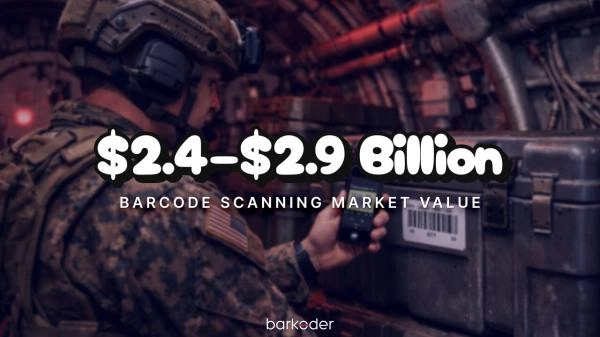
Defense logistics accounts for a sizable portion of high-reliability scanning deployments, despite the fact that military applications are frequently kept secret. The barcode scanning market was estimated to be worth USD ~2.4-2.9 billion globally in 2024-2025. Automation, traceability, and mission-critical operations drove the market's steady growth.
Key trends relevant to military and naval environments include:
- Growing adoption of 2D barcodes (QR Code, Data Matrix) for higher data density and error correction
- Increased reliance on mobile scanning SDKs instead of dedicated hardware
- Expansion of offline and edge processing for secure environments
Defense organizations increasingly favor software‑defined scanning solutions that can be customized, audited, and integrated into secure systems.
Mobile Barcode Scanner SDKs in Submarine Environments
Modern barcode scanner SDKs enable submarines to use secure, ruggedized tablets or handheld devices rather than single-purpose scanners. This shift offers greater flexibility while maintaining the reliability required for mission-critical operations. Instead of carrying multiple dedicated tools, crew members can rely on a single, hardened device that supports scanning, data entry, and system access in one secure platform.
Because these software-based solutions are fully on-device, they guaranty quick response times and continuous operation even in the absence of network connectivity. When secure connections are available, updates, configurations, and custom workflows can be managed centrally, lowering maintenance costs and prolonging device lifetimes.
Advantages consist of:
- Reduced hardware footprint
- Easier updates and long‑term software support
- Custom workflows tailored to naval procedures
- On‑device processing without network dependency
SDK‑based scanning aligns with the broader shift toward modular, software‑centric defense systems.
Security and Reliability First
Data security in military submarines cannot be compromised. Strict security requirements must be supported by barcode scanning systems, which must also be dependable and easy to use on a daily basis in high-stress situations. Sensitive operational data is represented by each scan, and accurately capturing and safeguarding that data are equally important.
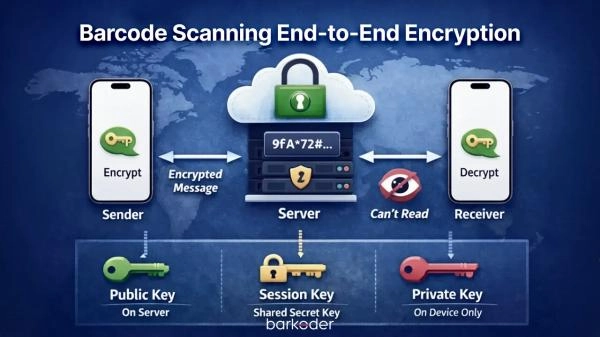
To meet these demands, barcode scanning systems must support:
- Offline operation
- Secure data storage
- Controlled access and auditing
- Long lifecycle support
Modern scanning SDKs are designed with these requirements in mind, ensuring that operational integrity is never compromised.
The Future of Barcode Scanning Below the Surface
Barcode scanning will continue to develop from a logistical tool into a strategic capability as naval operations become more data-driven. Scanning technology enhances readiness, efficiency, and mission success when combined with analytics, predictive maintenance, and intelligent software platforms.
Every scanned code reveals a tale of readiness, accuracy, and trust in the quiet world beneath the waves. Although barcode scanning may not be visible to the outside world, it is a silent force that keeps military submarines operating efficiently.